TLDR
- Data centers can consume enormous amounts of power and water, but their impact depends heavily on location, cooling technology and how new infrastructure is financed, says Applied Digital CEO Wes Cummins.
- Applied Digital pays for required electrical infrastructure and recirculates cooling water. But this story is largely overlooked because the public gets riled up after watching superficial, 20-second social media videos.
- Cummins concedes that data centers create relatively few permanent jobs and can bring construction, traffic and noise problems, but says many broader fears are misplaced. He points out that golf courses consume much more water than data centers.
The massive data centers being built to power AI have become a political target, blamed for everything from higher electric bills and depleted water supplies to noise, traffic and construction-related disruptions.
Opposition to AI data centers has spread across the U.S. According to the National Conference of State Legislatures, 15 states have introduced bills for moratoriums or bans. Thus far, six bills have failed while one passed the legislature (New York). The issue is also surfacing in political campaigns.
Wes Cummins thinks much of the criticism is aimed at the wrong target.
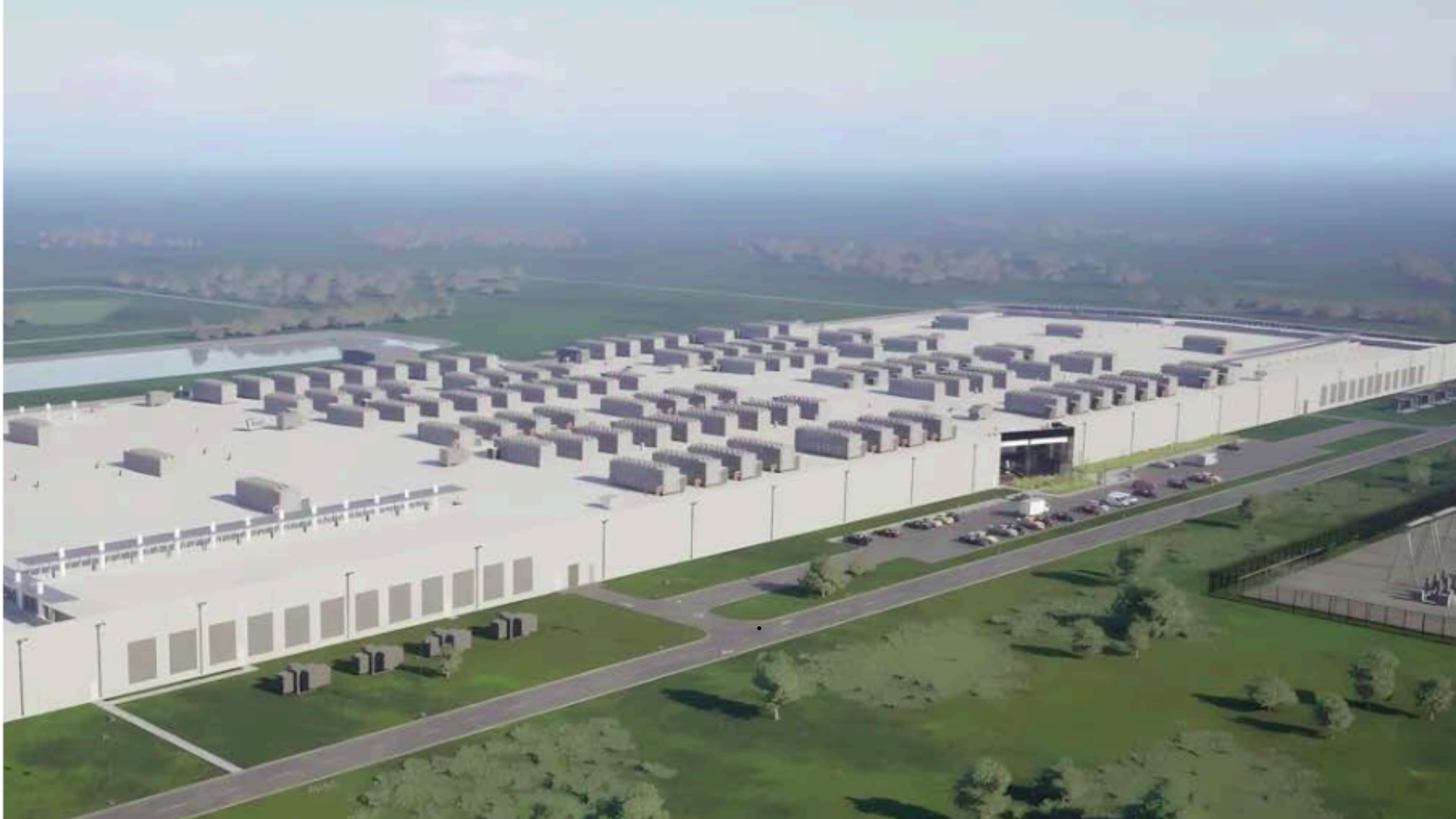
The co-founder, chairman and CEO of Applied Digital, a builder of AI data centers, said the impact of a facility depends on where it is built, how it is cooled and who pays for the power infrastructure required to support it.
Cummins said many of the criticisms from the public are wrong, fueled by 20-second social media videos without real substance.
He cited a largely positive write-up by the San Francisco Chronicle, which looked into the impact Applied Digital’s data center in Ellendale, N.D. had on the city. The paper discovered that the data center helped boost the city’s sales tax revenue by 775% in the first seven months of 2026 – and also raised taxable property value.
Still, Cummins thinks it won’t be easy to change people’s minds. “People just are mad about electricity rates going up. They want to blame something,” he told The AI Innovator. “Data centers are the scapegoat for it.”
Just the facts, ma’am
According to the Congressional Research Service, a large AI data center can consume 100 megawatts or more of electricity – enough to power 80,000 homes at a given time – while the biggest campuses can require more than 1 gigawatt or enough power for 800,000 homes. It also said a 100-megawatt data center can directly consume roughly as much water as 2,600 households.
The public is worried that this consumption could raise electric rates, strain power grids and water supplies, increase pollution and noise and consume large amounts of land without producing a lot of permanent jobs since data centers house racks of servers and don’t need a large staff.
Applied Digital itself is building at industrial scale. The Dallas-based company has five AI Factory campuses under contract representing about 1.4 gigawatts of critical IT load and roughly 2.15 gigawatts of utility power. Its contracted base revenue totals $36 billion, according to the company. One client is CoreWeave, an AI cloud company leasing space in its Ellendale facility.
The power question
Cummins’ defense of power consumption starts with geography. Applied Digital has concentrated much of its development in North Dakota, where it can place facilities close to available electricity rather than forcing utilities to move enormous amounts of power to them.
At Ellendale, the company built the data center beside a substation into which two gigawatts of wind generation feeds. Cummins said that power often goes unused because there’s not enough transmission capacity to transport it out to the end user. “So we said, we can … use that power that’s not being used, makes the grid much more efficient,” he added.
Montana-Dakota Utilities, which serves Ellendale, has to share a big portion of what it got from Applied Digital, resulting in savings in electricity bills for consumers.
In June, the utility announced that it has given back $38.4 million to North Dakota customers over the past three years as a result of working together with Applied Digital to “integrate significant power demand while maintaining reliable, cost-effective services for customers.”
Data center pays for new power substations
For new projects requiring additional electrical infrastructure – such as transmission lines, substations and transformers – Applied Digital bears the cost.
“In every single one that we have done, we pay for the electrical infrastructure,” Cummins said. “We pay for all of it ourselves.”
In its Harwood, N.D. data center, for example, the company is paying for electrical infrastructure “so that the rate payers are never on the hook for that,” Cummins said.
Some future facilities will require new electricity generation, he said, and Applied Digital expects to pay for infrastructure associated with serving those projects as well.
Meanwhile, Applied Digital typically signs 15-year contracts with customers. Cummins said the predictability of this large electricity load gives utilities something they rarely get – long-term visibility into future demand. Utilities can plan power generation around that demand instead of building capacity based largely on forecasts of population and economic growth.
What about the water?
Water has become another flashpoint. Traditionally, data centers use evaporative cooling systems that can consume a lot of water.
Applied Digital uses closed-loop liquid cooling instead.
Cummins compares the system to a car radiator: Liquid circulates through the facility, absorbs heat from computing equipment and carries it to heat-rejection equipment on the roof, where it is cooled and recirculated rather than continuously discarded. In North Dakota, the outside air can provide cooling for more than 200 days a year, he said.
The company initially fills the system with tap water, which is mixed with ethylene glycol and treated on site. The liquid is then reused.
“There’s no new water going in,” Cummins said.
Besides cooling the IT equipment, which uses the closed-loop system, water is used by another consumer: data center employees. Workers use sinks, toilets, showers and other building facilities just like everyone else.
“The exact same way your house would use water is how we do it,” he said.
As an aside, Cummins noted that golf courses use far more water than data centers and so does almond farming. He quipped that, ironically, the same folks who are protesting data centers could be happily drinking almond milk.
The criticisms Cummins says is fair
Cummins doesn’t dismiss every complaint.
The critique that data centers create few permanent jobs is “fair,” he said. “We don’t create a huge amount of ongoing jobs. There’s a massive amount of construction jobs, of course, but when those finish, the ongoing jobs, we don’t create a huge amount for the electricity we use.”
But Cummins also said that even hundreds of jobs can make a big difference in small towns like Ellendale, which has roughly 1,100 residents. He said these jobs can have an outsize effect in a town that has lost population and economic opportunities.
Another valid complaint is construction-related disruptions. “The construction is a pain. The traffic is a pain,” Cummins said.
He said Applied Digital works with communities to route trucks around school pickup and drop-off times and deal with mud, road conditions and other problems surrounding large construction sites.
Noise is another concern. Cummins said liquid cooling reduces the need for server fans, while thick concrete walls limit how much sound escapes the facilities. The company says outside noise is relatively low even though traditional air-cooled data halls can be quite loud inside.
For Cummins, those are the kinds of issues communities should be debating – not blanket assumptions that every data center will drain the water supply or automatically increase household electricity bills.
“I love that article (from the San Francisco Chronicle) because it honestly talked about the real problems and the real benefits, not like these boogeyman problems that everyone likes to talk about that just aren’t really the case,” Cummins said.
He does concede that some places may simply have enough data centers already, such as Dallas and Northern Virginia.
“It’s not for everywhere,” he said.
Author

Get the latest insights about enterprise AI.
Subscribe to our newsletter. Thank you.






Be First to Comment