TLDR
- Revalia Bio grew out of research involving kidneys rejected for transplant.
- Its platform tests drugs on donated human organs maintained on perfusion machines.
- The startup uses AI to help design studies, match organs with research protocols and analyze experimental data.
Jenna DiRito’s path to building a biotech startup began with kidneys that no transplant center wanted.
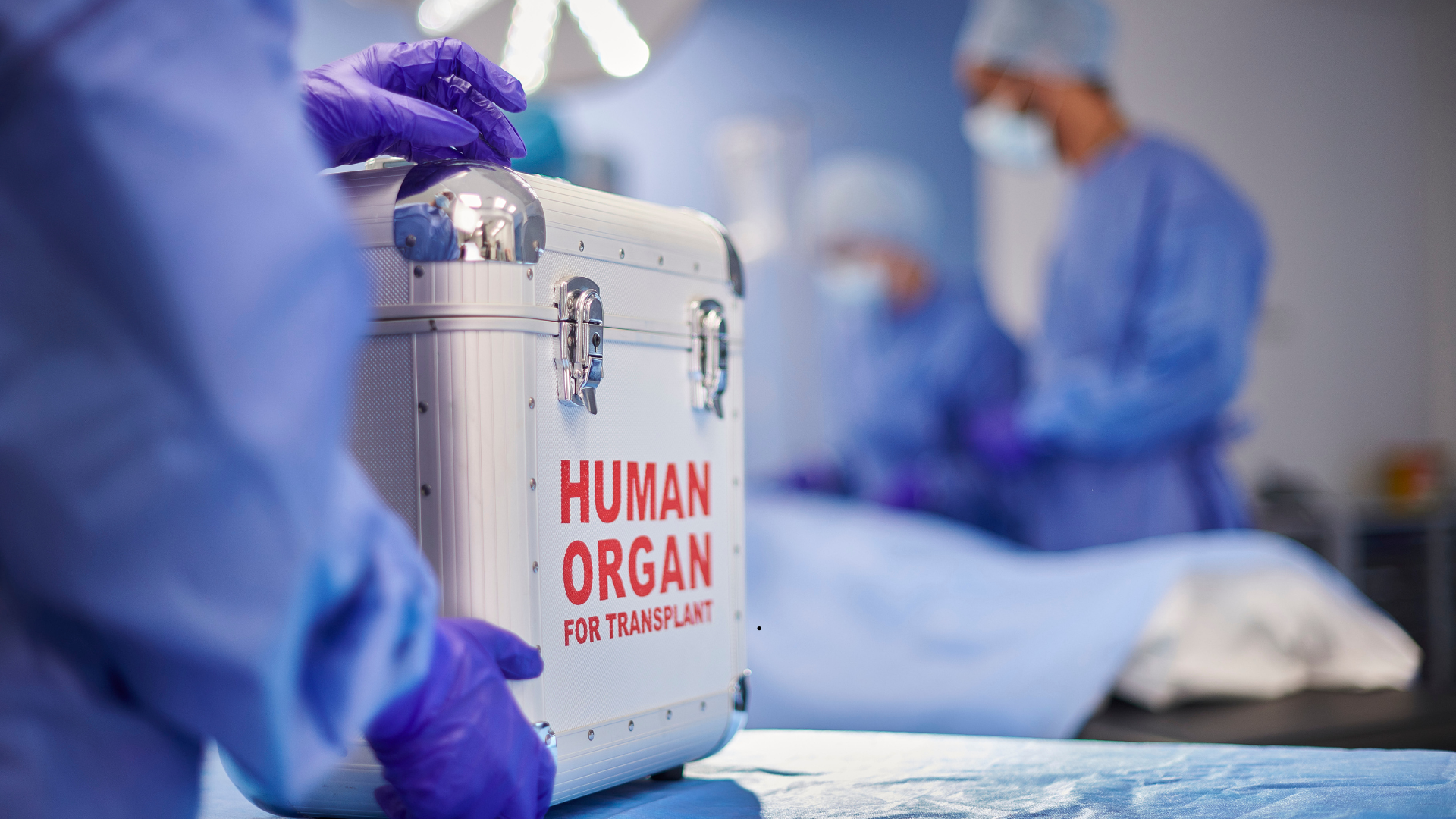
While completing her doctorate in transplant surgery in the U.K., DiRito worked with researchers using normothermic machine perfusion – an advanced organ preservation technique – to evaluate kidneys that had been rejected for transplantation. The organs were kept alive outside a human body by circulating warm, oxygenated fluid through them, allowing researchers to assess whether they still functioned.
DiRito likened the process to putting the kidneys on a treadmill. Researchers could measure how the organs performed and determine whether some had been rejected because transplant teams lacked enough data.
But DiRito saw another potential use for the technology.
Many of the organs could never be transplanted because they came from donors with conditions such as cancer, advanced diabetes or fibrosis. Those diseased organs, she realized, could provide something drug developers needed: direct information about human biology.
“We fundamentally believed that these organs were going to unlock the future of medicine because people were dying from the diseases we needed cures to,” DiRito, Revalia Bio’s co-founder and COO, said in an interview with The AI Innovator.
DiRito brought the technology to Yale University, where she worked with researcher Greg Tietjen, now Revalia Bio’s co-founder and CEO. The pair tried to build an academic operation capable of accepting donated organs around the clock but found that a university laboratory could not easily support the staffing, logistics and infrastructure the work required.
“We needed to do something a lot bigger, so we burned the bridges and decided to spin out into our own company in Revalia without a dollar in the bank,” she said.
The startup secured pharmaceutical backing early on. Revalia is also part of a team led by Charles Stark Draper Laboratory that recently received an Advanced Research Projects Agency for Health (ARPA-H) award of up to $56.2 million. ARPA-H is a federal funding agency within the U.S. Department of Health and Human Services. The winning team includes Yale University and LifeShare Network.
Today, Revalia Bio uses kidneys, livers and lungs rejected for transplant to test experimental drugs and medical devices. It keeps the organs functioning outside the body for three or four days and collects physiological and molecular data about how they respond.
DiRito said AI helps them design studies, match donated organs with research protocols and analyze the resulting data. The goal is to give drug developers better information about how an experimental treatment may behave in humans before they test it in living patients.
A second purpose for donated organs
When an organ cannot be transplanted but remains viable for research, Revalia can place it on a perfusion circuit similar to those used in clinical transplantation. Instead of evaluating whether the organ is suitable for a recipient, Revalia tests how it responds to a drug or device.
“Instead of just seeing how that organ behaves, we ask the question of how does that organ behave in response to a drug or a device,” DiRito said. “That way we get preclinical data, and a lot of it, without ever having to put a living patient’s life at risk.”
Researchers can administer increasing doses of a drug and watch for signs of toxicity. In a liver, for example, they can measure bile production, lactate clearance, blood flow and pressure. They can collect repeated biopsies and examine molecular changes at precisely recorded times after a dose is administered.
That level of sampling would not be possible in a clinical trial because repeatedly taking biopsies from a living patient would be dangerous and unethical.
Revalia’s largest programs involve kidneys and livers, although it also works with lungs. DiRito said the startup processes hundreds of organs each year.
The organs are donated for research with consent from donors or their families and are not diverted from patients awaiting transplants.
“All of these data are built on the fact that people are generously donating it for the advancement of humanity and medicine in general,” she said. “We should never, never forget that’s where it’s coming from – it is all very human-based and altruistic.”
Testing the leap from animals to people
The startup is also addressing a persistent weakness in drug development: Treatments that appear safe or effective in animals often produce different results in humans.
More than 90% of drugs that clear animal studies fail to receive Food and Drug Administration approval, frequently because of safety or efficacy problems uncovered during human trials, according to the FDA.
Revalia isn’t alone in developing human-based alternatives to animal testing. DiRito cited Bexorg, another Yale spinout that uses human brains and AI for neurological drug research. Adjacent competitors include Emulate, which develops organs-on-chips, and Quris-AI, which combines AI with miniature ‘patients-on-a-chip’ to assess drug safety.
Unlike those chip-based platforms, Revalia and Bexorg center their systems on donated whole human organs.
DiRito described one project involving an unidentified drug developer that had optimized a drug-delivery protocol using pig kidneys. When Revalia tested the protocol in a human kidney, it failed because the organ required different pressures and flow rates.
The developer was then able to adjust its delivery method before moving into human testing.
“Imagine our customer now going into the clinic, spending all of this time, all this money, all these resources and energy, and it ultimately not having any effect because we didn’t optimize the way that this drug was delivered,” DiRito said.
She declined to name Revalia’s pharmaceutical customers, although she said the startup works with global partners.
DiRito said the approach has not shortened drug-development timelines as yet. “Right now, it has not cut down on drug development time,” she said. “But we anticipate in the future, if we can prevent the failures earlier, then there’s no reason why it shouldn’t cut down on that time.”
Where AI enters the laboratory
Revalia uses AI across its organ-study workflow.
An AI agent screens donor information and matches available organs with appropriate research protocols. The task once required DiRito to remain awake at night taking calls from organ procurement organizations around the country.
“I no longer have to do that, and I have an agent running for me,” she said. “It is still human in the loop, but it is not as intensive as it used to be.”
AI also supports trial design by helping researchers select endpoints, determine what data should be collected and schedule when samples should be taken.
DiRito said Revalia uses Claude and ChatGPT for general study-design work. It is also training its own agents within those systems and developing models for more specialized work, including dose selection.
The startup’s website describes AI as being embedded throughout five layers of its ‘Human Data Stack.’ The platform generates multimodal datasets from organs and tissues, captures physiological and molecular information, integrates different human-derived datasets, applies foundation models to interpret them and delivers findings to drug and medical-device developers.
Revalia lists possible outputs including safety signals, dose selection, pharmacokinetic and pharmacodynamic profiles, biodistribution, mechanism of action and optimized delivery.
The whole organ as a Rosetta Stone
The functioning organ is only one component of Revalia’s Human Data Stack.
The startup combines information from the organ with the donor’s medical history, biopsies, organoids – miniature, lab-grown models of organs – and organs-on-chips, small devices that mimic aspects of organ function.
Each source answers different questions. Organs-on-chips can support high-volume drug screening, while whole organs provide a view of how tissues and physiological processes interact. Medical histories add information about the donor’s health and biopsies show how tissue changes during an experiment.
Revalia can also use cells from the donated organ to create organoids or seed organs-on-chips, allowing researchers to compare multiple models derived from the same donor.
“None of these technologies really work well in isolation, or none of the data can provide you everything you need in isolation,” DiRito said. “You need that integration across each of those different layers of available human data that we have.”
She described the whole organ as a “Rosetta Stone” connecting the different forms of human data.
AI helps organize and interpret the volume of information produced across those sources. The longer-term goal is to use the data to build computational models of human physiology.
From physical organs to digital models
Revalia has generated preliminary results involving troglitazone, a diabetes drug withdrawn from the U.S. market after reports of severe liver injury. DiRito said its perfused livers produced drug-clearance patterns similar to those observed in patients and displayed toxicity as the dose increased. The startup plans to publish fuller results from the ARPA-H-supported work.
DiRito said some experiments could eventually be conducted using computational models without requiring a physical organ each time. But that remains a future ambition rather than a current capability.
“I do believe that there will be some areas that we will no longer need to test on physical organ systems anymore,” she said.
Revalia’s development coincides with an FDA effort to reduce reliance on animal testing when reliable alternatives are available.
The agency is encouraging drug developers to explore new approach methodologies, including organ-on-a-chip systems, human-derived laboratory models and AI-based simulations. In March, the FDA issued draft guidance describing how drug developers can validate the reliability of those methods in regulatory submissions.
DiRito said Revalia has been speaking with the FDA about using its data in investigational new drug (IND) and investigational device exemption (IDE) applications.
Author

Get the latest insights about enterprise AI.
Subscribe to our newsletter. Thank you.