TLDR
- San Jose is using AI to fix common frustrations with city services by automating tasks and improving access.
- AI-powered systems are already delivering results, including a citywide bus optimization program that cut travel times by about 20% and tools that detect potholes and illegal dumping before residents report them.
- The city is pairing deployment with workforce training and governance, launching free AI education programs and partnerships while emphasizing AI as a way to augment, not replace, public workers.
For many residents, interacting with local government can be an exercise in frustration.
Phone calls get transferred from department to department. Permit applications bounce back for incomplete or incorrect paperwork. Potholes or illegal dumping may sit for weeks before someone reports them through a 311 system. Even basic questions about city services can require navigating complex websites or long waits for assistance.
City leaders across the U.S. increasingly believe AI could help address those problems by automating routine tasks, detecting issues earlier and making government services easier to access.
San Jose, the largest city in California’s Silicon Valley, is emerging as one of the most ambitious users of AI to ease residents’ pain points. It is deploying AI systems to improve everything from bus travel and road maintenance to permitting and resident services, while simultaneously investing in AI education and governance frameworks designed to guide responsible use.
“People often find interacting with local government to be very painful,” said Stephen Caines, the city’s chief innovation officer, in an interview with The AI Innovator. “Frankly, oftentimes people have bad customer experiences when they call government,” such as “not getting the information you needed, getting the wrong information, being placed on hold, being kicked between departments.”
But San Jose is working to deploy AI-powered systems to reduce or eliminate such pain points and improve residents’ quality of life. AI, he said, can help cities create a better “front door” to government by guiding residents through services, automating repetitive tasks and identifying problems before residents have to report them.
That philosophy has shaped a growing portfolio of AI initiatives in San Jose, which spearheaded the creation of the GovAI Coalition for responsible deployment of the technology in the public sector. GovAI has attracted 900 public agencies that are sharing tools and best practices.
Harnessing the technology comes at a crucial time when government revenues are under duress but residents’ needs continue to grow, he said.
“Unless we’re going to find a magic pot of money or the federal government has a little bit of a change of tune, technology gives us those efficiencies and those optimizations to be able to close that gap and really meet the needs of the residents,” Caines explained.
Removing residents’ pain points
When choosing among different pain points to address, one of the first issues to surface is making it easier for residents to get around.
“Transportation is something that touches the lives of almost every single San Jose resident,” Caines said. “When we think about our priorities as a city … we think about things that, number one, have that cross demographic appeal specifically to a large number of residents. And two, we really wanted to focus on something that was scalable.”
To that end, the city deployed an AI-powered system designed to make bus travel faster and more reliable. Public transportation often takes longer than driving, which can make it less attractive to use. The result is more cars on the road to snarl traffic and higher greenhouse gas emissions.
“The bus, number one, is great for (easing) congestion. Two, it’s great for sustainability,” Caines said. Third, sharing a vehicle gives residents who normally don’t know each other have the opportunity to interact if they wish.
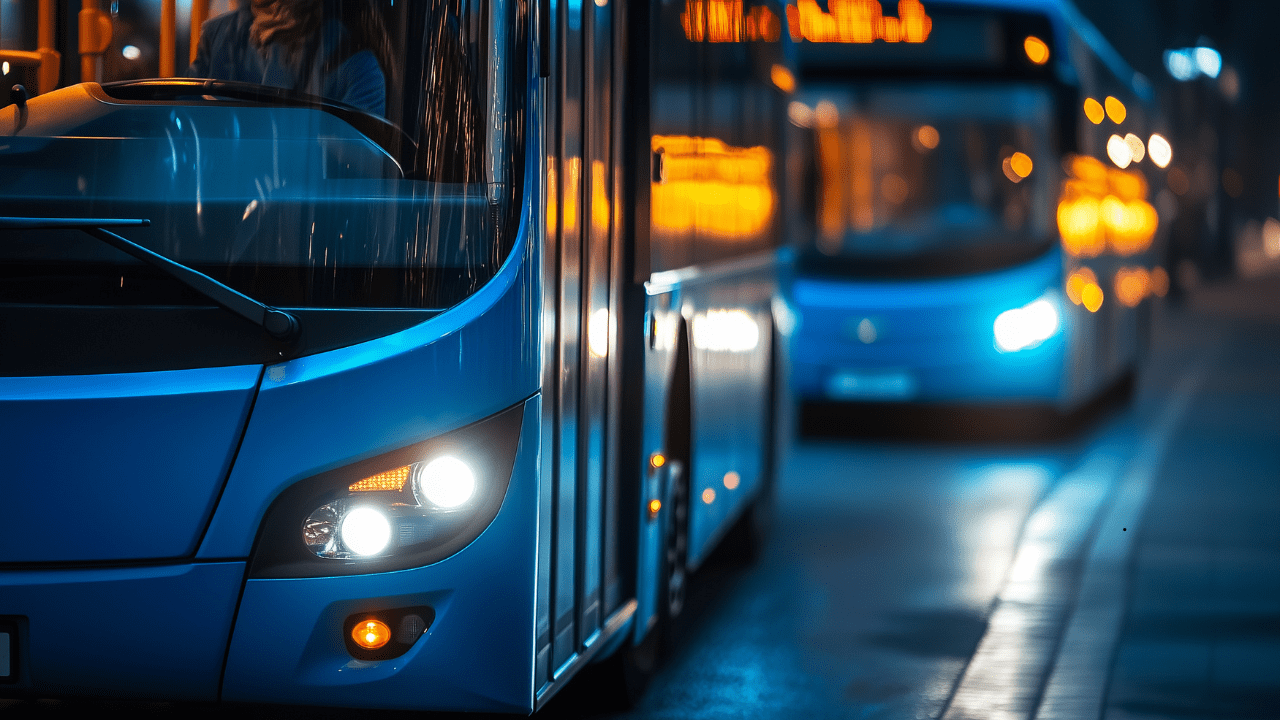
The city worked with traffic software firm LYT to deploy an AI-driven system across all bus routes that cut travel times by about 20% by adjusting traffic signals in real time, according to Caines.
The technology works by connecting buses to traffic lights through a cloud-based traffic signaling prioritization system.
Each bus carries a transponder that sends its location through cellular networks every two to three seconds. Software analyzes the bus schedule, historical travel patterns and real-time location to determine whether a traffic light should turn green as the bus approaches an intersection.
If traffic conditions allow, the system adjusts the signal to reduce delays.
The technology helps address a common problem in urban transit: Small delays can cascade into longer travel times. For example, a wheelchair-bound passenger takes time to get on board and also exit the bus. In downtown San Jose, intersections may be only 100 to 200 feet apart, meaning buses often encounter traffic lights shortly after leaving a stop. Another common scenario is when buses have to re-route because some roads are blocked for things like street parties or sporting events.
By adapting traffic signals dynamically, the system helps buses maintain more consistent schedules. “Having less congestion and making sure our traffic and roads are continuously moving and progressing is always going to be a positive,” Caines said.
San Jose first tested the technology in 2023 on two routes before expanding it citywide. Caines said 90% of the pilot funding came from state and federal sources.
Illegal dumping, potholes and other irritants
Another area where San Jose is experimenting with AI is infrastructure maintenance.
The city has tested computer vision systems capable of detecting potholes, illegal dumping and other street hazards. In a pilot program, the system identified many problems before residents reported them through the city’s 311 service system.
The goal is to shift municipal services from reactive to proactive maintenance. Caines said the city’s IT director asked him this question that got the ball rolling: “What if instead of waiting for residents to report (issues), the city could actually proactively identify issues?”
That capability could allow city workers to address problems more quickly while reducing the burden on residents to report them. “You create greater road safety for relatively minimal cost,” Caines said.
San Jose is also experimenting with AI tools that help residents navigate city services and prepare permit applications more accurately.
One example involves software that reviews accessory dwelling unit permit applications to determine whether required documents are included before submission. Incomplete applications are one of the most common reasons permits are delayed or rejected.
By flagging missing information early, the system could reduce repeated trips to city offices and speed up approvals.
Free AI training, no experience necessary
San Jose’s AI strategy extends beyond operational improvements.
Earlier this month, San Jose Mayor Matt Mahan, along with San Jose State University officials, opened the “AI Center for Civic and Social Good,” which aims to expand access to AI training and tools.
The center will serve as the headquarters for the city’s “AI for All” initiative, a public-private partnership with Google, OpenAI and Anthropic to provide free AI education and resources to residents.
The program is designed to help workers, students and small businesses develop practical AI skills as the technology becomes more central to the economy.
City employees are also being trained to use AI tools through the city’s IT Training Academy. Hundreds of workers have already completed courses, and officials expect about 1,000 employees to receive AI training. Participation in the program is voluntary.
Public-private partnerships are another central component of San Jose’s strategy: It partnered with San Jose State University to create a 10-module course teaching practical uses of AI in workplace settings.
With all this use of AI, Caines said the goal is not to replace workers but to help them manage increasing workloads more efficiently.
San Jose employs about 7,000 city workers serving one million residents, making it one of the leanest-staffed municipal governments in the country on a per capita basis, he said. “There’s often more work than there are bodies to perform it.”
Looking ahead, Caines said the next challenge is to use AI in emergency preparedness.
The city is evaluating software designed to help manage evacuations during disasters such as wildfires, including systems that model evacuation routes and coordinate emergency responses.
Transportation improvements will also continue to be a focus.
San Jose already uses related technology known as emergency vehicle preemption, which gives police and fire vehicles a series of green lights while responding to emergencies. Officials are exploring whether similar systems could eventually benefit other vehicles such as ambulances or school buses.
“Anything that we can do that helps prepare us for natural disasters would definitely be at the top of my list, and continuing to improve our transportation system … is another major focus,” he said.
Author

Get the latest insights about enterprise AI.
Subscribe to our newsletter. Thank you.