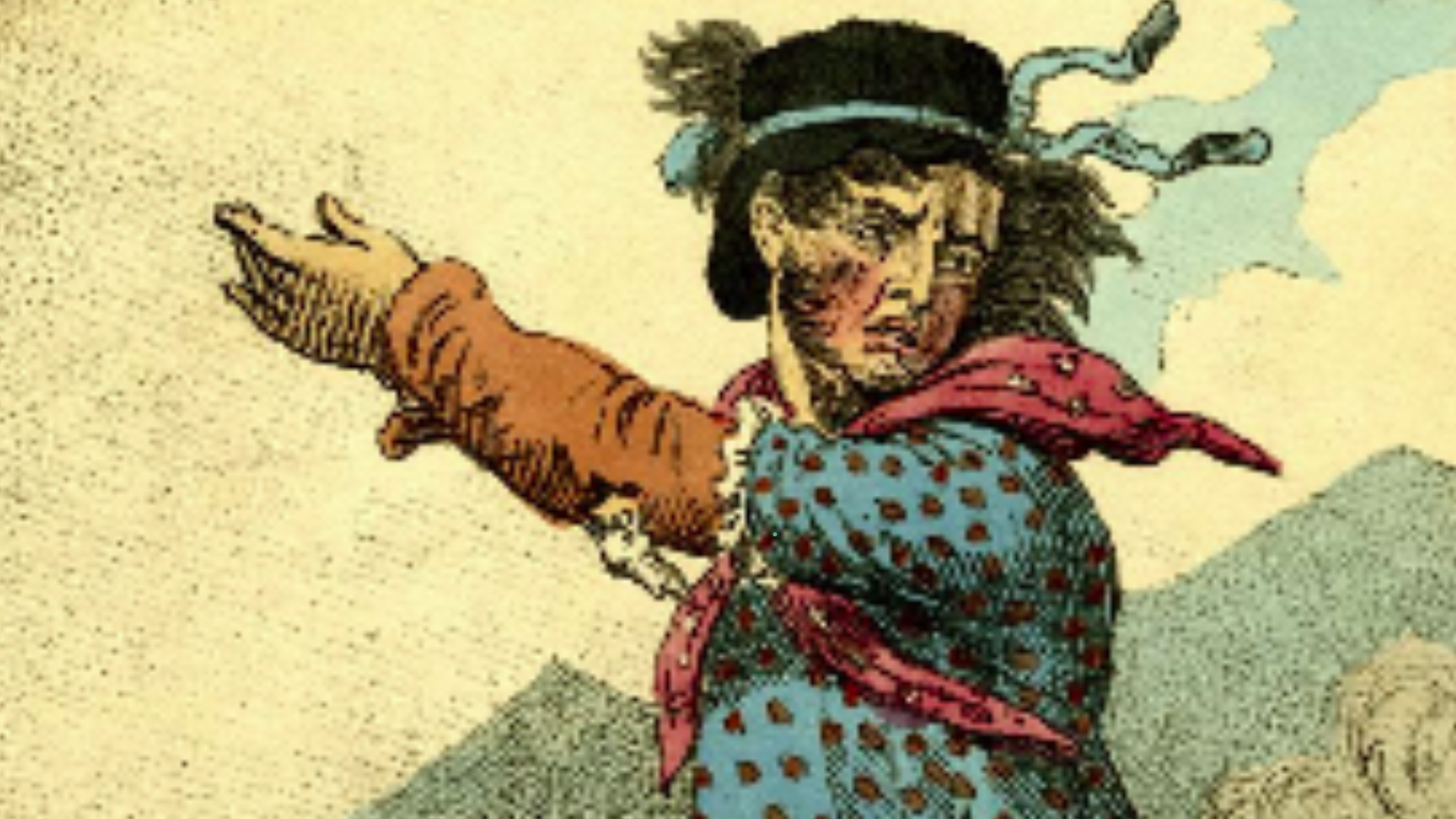
Luddites have gotten a bad name. Well, perhaps more accurately, they have gotten a misleading, even inaccurate reputation. In fact, if you are looking past the glare of AI as an amazingly shiny object and especially if you have to lead the actual change in work and in organizational life that AI can foster, then you might do well to spend a little time with the Luddites. This article provides an opportunity to do just that.
In 1765, James Watt executed a major improvement of Thomas Newcomen’s 1712 steam engine, an improvement that eventually made possible the seemingly impossible — steam-driven ships that moved against current and wind, vehicles by the 1820s that moved at a sustained 20 mph, impossible for a horse, and factories mechanized and powered by steam instead of flowing river water.
The Luddites were frequently craftspeople, handcrafters of cotton cloth. They were most active from 1811 to 1813 in England. They did not necessarily oppose technology. Rather, they feared. They feared for their livelihoods and well-being and for that of their families. They saw an industry changing – machines being used to mass produce lower-quality goods and cheaper, less-skilled workers being hired illegally instead of trained craftsmen (“Writings of the Luddites” by Kevin Binfield and “Breaking Things at Work: The Luddites Are Right about Why You Hate Your Job” by Gavin Mueller).
These fears arose in the context of a troubled time and an uneasy national zeitgeist formed by food shortages, higher taxes, and general unease brought on by the Napoleonic Wars. Luddites were “an active population … already economically and politically marginalized, … and experiencing cultural instability wrought by industrialization, famine, economic depression, and war.” One Luddite wrote, “the absentee mill owners, had better raise wages (and) be content with a moderate profit, than have … mills destroyed.” (Binfield, p. 4)
The origins of the Luddites
Luddite resistance varied in form from area to area in England and involved a range of tactics from letter writing to public protest to, most famously, machine smashing. Attacks on machines coincided with food riots and arms raids, depending on the area.
The Luddites were, however, not opposed to machinery per se, many being employed as machine operators themselves. Rather, as Binfield writes, they generally limited their attacks to manufacturers using machines in a “fraudulent and deceitful manner,” skirting labor practices and convention.
Luddites understood the power of PR. They created and popularized a fictional leader named Ned Ludd, whom they portrayed variously as captain, general or king. According to Binfield, Ludd “epitomized the right of the poor to earn their livelihood and to defend the customs of their trade against dishonorable capitalist depredators.” Letters were issued in his name, sometimes from legendary places such as Robin Hood’s Sherwood Forest. In another act of political theater, Luddites occasionally marched in women’s clothing as Ludd’s wives, according to Richard Conniff, writing in the Smithsonian Magazine. While not ubiquitous, the fictional Ludd did have a large and very public presence.
Luddites sought to preserve “their jobs and their trades,” observed Binfield. They were also “protesting the way that factory owners and entrepreneurs were using technology to degrade their working conditions, erode their wages, and usher in a new kind of working … that would tear up their autonomy and leave them subservient to bosses,” asserted Brian Merchant in his book, “Blood in the Machine: The Origins of the Rebellion against Big Tech.”
The Luddites failed, and, for the most part, had their history written immediately by the victors. Lethal military force and punishing legal decisions – hanging and deportation to Australia – crushed the protests. Subsequent coverage secured a derogatory meaning for the term Luddite.
What the Luddites feared did indeed come to pass: The number of handloom weavers dropped from 250,000 around 1800 to 7,000 in 1860. Their acute pain did not match the overall workers’ experience: “The problem for laborers was less unfair pay than sharp rises in the cost of living. Food prices rose steadily, and sometimes soared, because of war and high tariffs,” according to The Economist.
Lessons for today’s business leaders
- Fear matters. Want to lead change? Stay attuned to the emotional reality of others, particularly those who are key to implementation. Not everyone sees the world from the same vantage point. Choose wisely. What people feel often depends on where they stand and how the change affects them. Hence, all resistance is not the same and should not be treated as such.
Treating Luddites as anti-change misses the point and leads to a flawed diagnosis and, consequently, ineffective remedies. Change disrupts and creates winners and losers. Valid vested interests abound. Reaching consensus among all stakeholders will prove unlikely, but recognizing and understanding their interests may enable less drastic and less costly solutions. This holds true for AI particularly in the case of employees central to its use and actual working implementation. Their actions can significantly affect the realized operating value of AI and, thereby, its ROI.
Implication: Select the right lens through which to view and lead change. Stay attuned to the concerns, fears and aspirations of those most affected – and act accordingly. - Context matters. Imagine you’re trying to lead change in an environment filled with people already feeling neglected, even oppressed. They mistrust the elites, believing the system is stacked against them. Decades of events have eroded their trust – from the Vietnam War to mass rolling layoffs to pension fund raids to broken promises about globalization, pension scandals, the dot-com bust and the 2008 financial crisis. Into that context comes a new technology that promises significant benefits for executives, investors and other elites. Yet, whether those benefits will also flow to workers seems far less certain and decidedly so from their perspective.
Implication: To lead change more effectively in such times, see reality clearly, evidence explicit principles, communicate honestly and act with clear, evident integrity. In short, differentiate yourself as a leader by your actions. (How Leaders Can Regain Trust in Untrusting Times.) - People’s sense of agency matters. People want to feel that they have a modicum of control over their lives and work. They will fight to preserve it. Threaten that sense and employees, like the Luddites, often push back and hard, even destructively, rather than succumb to feeling powerless. By resisting, they regain a sense of agency and control.
Implication: Look for opportunities to involve people in shaping the use of AI. They may not control whether AI is adopted, but influencing its use can secure a sufficient sense of agency. - Share the benefits. Resist the temptation to rely on grand speeches – ‘we’re all in this together’ – or appeals to strategy. If AI creates significant value, consider ways to share the benefits with employees through bonuses (e.g., Samsung), profit-sharing (e.g., Scanlon Plans), shared ownership programs (e.g., Mondragon and ESOPs) or other mechanisms (e.g., The Guardian’s Scott Trust). Options and choices do exist.
Implication: If you want people to accept AI-driven changes, don’t assume that the current way of running organizations constitutes the only option. Broaden your own thinking about how decisions are made, how employees participate and how the value created by AI is shared.
In closing, I recall a conference that Wharton held decades ago regarding the U.S. steel industry— already battered and gutted with more in the offing. A corporate executive addressed the gathering of business and union leaders early on, closing his talk with an intended rallying cry for common cause as “we all have the same road to travel.”
A union leader then pronounced from the audience: “The same road maybe, but you’ll be chauffeured and we’ll be walking.” Perhaps they shared the same challenge … perhaps. But they did not experience the same vulnerability or sense of agency, since the executive might get a bonus while workers could lose their jobs.
This tension persists, inhibits change, fuels resistance, and hampers implementation of new technologies – something the Luddites would recognize. We’d likely therefore do well to look back to move forward, perhaps beginning with the Luddites and with AI firmly in mind.
Author

Get the latest insights about enterprise AI.
Subscribe to our newsletter. Thank you.