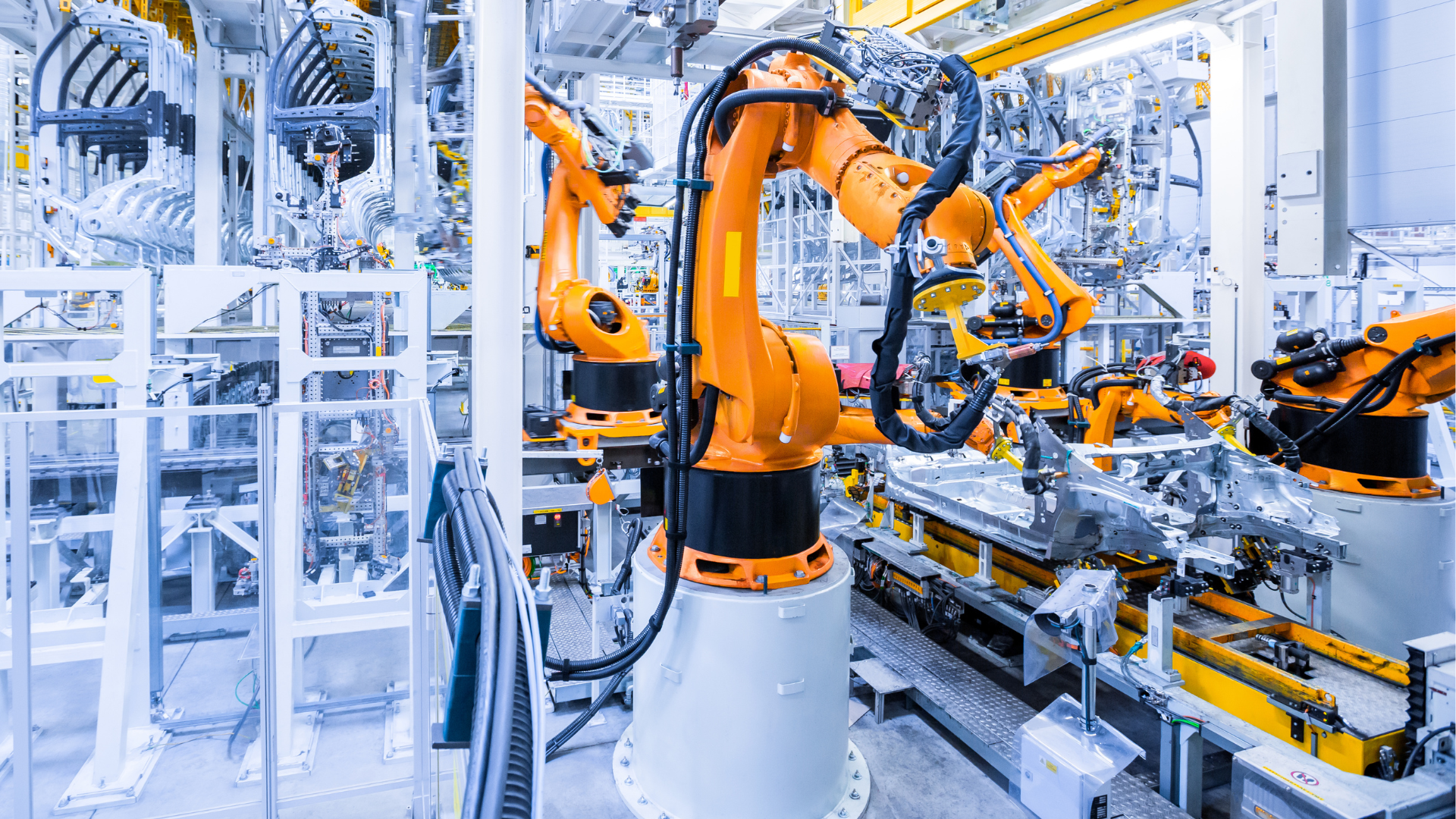
Robotics or physical AI may be generating excitement of late, but Fady Saad, co-founder of Cybernetix Ventures, says investors should look beyond the hype surrounding humanoids. He sees some of the strongest opportunities in purpose-built systems tackling costly problems in defense, space, health care and advanced manufacturing.
In this email Q&A with The AI Innovator, Saad discusses what separates promising robotics startups from science projects, why physical AI could become a bigger economic opportunity than knowledge-work AI, and which young companies he believes are worth watching.
The AI Innovator: What market niches of robotics are generating excitement today?
Fady Saad: Right now, there is energy concentrating in defense, space, health care, and even advanced manufacturing. Within these applications, there is a problem urgent enough that the buyer is already paying to solve it – whether that’s astronaut time at roughly $150,000 an hour, a defense mission where the alternative puts people at risk, or a manufacturing line where reliability is non-negotiable.
What metrics do you look at to find robotics startups with real market potential?
We start with the fundamentals: a vertical-specific, purpose-built solution rather than a general-purpose play, a team with a domain-expert co-founder from the target industry, demand we can validate directly with corporate partners rather than pilot interest alone, and a clear path to revenue within six to 12 months.
Beyond that, we look for things like the potential for multiple revenue streams across hardware, software, services, parts, and data; structural stickiness, where integrated hardware drives retention of five years or more; and a credible path to the near-perfect reliability that manufacturing and warehouse use cases demand.
This is also why we’ve stayed out of the humanoid wave so far. Form should follow function, and most of what we see there started from the form without a specific problem to solve. The spotlight on humanoids and shiny objects distracts from trillion-dollar opportunities we can solve with technology that already exists.
Several robotics companies are preparing for or pursuing IPOs. Does that signal the industry has reached an inflection point?
Companies like Symbotic and Berkshire Grey went public starting in 2021. The inflection point itself arrived a handful of years ago, and the headlines are finally catching up. As an early-stage investor, our job is to identify the most promising companies years before the public markets notice – and to help them get there. We’re glad to see these milestones and excited for this growing next wave of robotics companies.
Are we underestimating the economic impact of automating physical work, and could robotics ultimately prove to be the larger AI opportunity?
Yes, we’re underestimating it. Most of the AI attention has gone to knowledge work because that’s where the progress is visible. The hurdle to clear is data. Knowledge-work AI took off because text and code were already digitized, while the movements and context of physical work have never been captured at scale. Once that gap closes, physical AI can compound the way software did. It’s a mega opportunity, but it requires building the data foundation first.
Please name a few robotics startups that show real promise.
A few worth watching: Rugged Robotics, a Texas company whose robot prints construction layouts directly onto floors, is now expanding into data centers and warehouses.
Another is Verve Motion, whose lightweight exosuit takes the strain off workers lifting heavy loads and recently drew partnerships with a global PPE leader and one of the world’s largest airline groups.
Dash Bio is using robotics and AI automation to expedite clinical bioanalysis and drug development. Corsha is securing the machine-to-machine connections that all critical robotics infrastructure will need to run on.
Author

Get the latest insights about enterprise AI.
Subscribe to our newsletter. Thank you.