PARIS – French and German officials called for a stronger European artificial intelligence strategy, arguing that the region must build more of its own digital infrastructure, deepen cross-border cooperation and move faster to turn research into global technology companies.
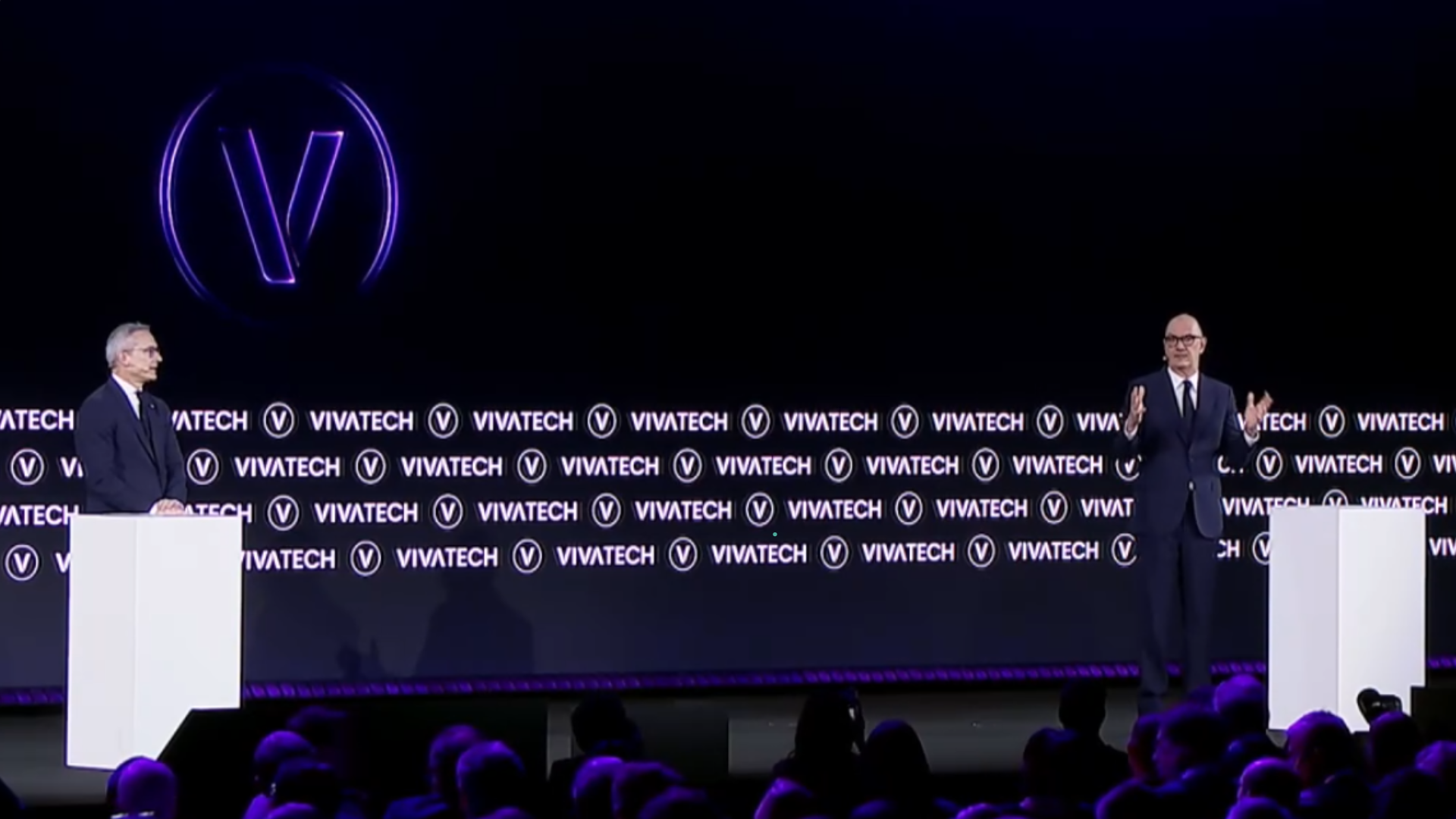
Speaking at the VivaTech conference in Paris, French Finance Minister Roland Lescure and German Digital Transformation Minister Karsten Wildberger framed AI as a test of whether Europe can become a technology maker rather than primarily a user and regulator of systems built elsewhere.
“Three years ago, AI just landed in our lives with a bang,” Lescure said. “It is going to affect the way we work, the way we interact, the way we sell, the way we buy, the way we travel, the way we vote.”
Lescure said France’s investment in startups, innovation and digital infrastructure over the past decade helped make Paris a global technology destination. But he said the next decade will be more consequential because AI will reshape economies, governments and democratic systems.
“We have the responsibility to make sure that the immense prosperity that’s going to be created by AI is a blessing for the world,” he said at Europe’s largest tech conference, which sponsored The AI Innovator‘s trip.
The message from business leaders on a separate panel was similar but more blunt: Europe has talent and research, but it still struggles to scale companies, mobilize capital and buy from its own startups.
One deep-tech founder said Europe’s decentralized research system is a strength, with strong university labs and technical talent outside the usual hubs of Paris, Munich and Berlin. But he said startups often fail to pair scientific expertise with business leadership early enough.
“It’s always tech,” he said, adding that the critical step is mixing “technical expertise” with a business team that can commercialize and scale the product.
Europe’s AI window
That business perspective reinforced Wildberger’s warning that Europe has too often watched major technology shifts from the sidelines.
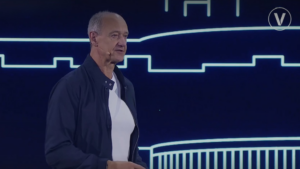
“Software, platforms, clouds, chips. Too often they were built elsewhere,” Wildberger said. “We used them. We regulated them. We adapted to them. But only too rarely did we shape them ourselves.”
With AI, he said, Europe has another chance. “A window is open to catch up. But it won’t stay open for long,” he added.
Wildberger said recent restrictions on access to advanced AI systems for foreign nationals showed how quickly technology dependencies can become strategic vulnerabilities. “Actions can change overnight. Rules can change overnight. Dependencies become visible overnight,” he said.
For both ministers, the answer is European digital sovereignty. But Wildberger stressed that sovereignty should not mean isolation. It should mean the ability to choose suppliers, verify critical systems and build domestic alternatives.
“Sovereignty is not isolation. It is the ability to choose. It is the ability to compete and to grow,” he said.
A pan-European AI champion
Business leaders said the same issue is playing out in sectors such as space, defense, quantum computing and enterprise software.
One aerospace executive said Europe should not try to build purely French or German champions, but global companies with European roots. Her company, she said, has operations across Germany, France, Italy and Spain, using each country’s strengths as a center of excellence.
“I want to build a global champion with European roots,” she said.
She argued that private financing gives startups more freedom to choose the best industrial setup before turning to governments as anchor customers.
Waiting first for public money, she said, can lead to fragmented projects shaped by national politics rather than business logic.
That point aligned with Wildberger’s argument that governments must become strategic buyers of European technology. “The state is not a good entrepreneur, but the state is a very good customer,” he said. “In that sense, we have to be also there early. We have to buy European solutions, we have to support startups, we have to trust them, we have to help them in the scaling phase. Governments can set direction, we can create demand and remove barriers.”
Germany’s AI ambitions
Wildberger said Germany is implementing a national data center strategy to double computing capacity to 60 gigawatts by 2030 and quadruple AI capacity within three and a half years. Germany is also building a sovereign cloud infrastructure, known as Deutschland Stack, led by European consortia.
Business leaders said government procurement could be one of Europe’s most powerful tools if it helps startups scale. One executive said a euro of government contract value can attract five to 10 euros of private investment because it validates demand and reduces investor risk.
Still, several business leaders said Europe’s capital markets remain too cautious. One executive said European money exists, but too much of it still flows into traditional assets rather than high-risk technology companies. Another said the problem is not only capital, but ambition.
“If I could choose between mindset and money, I would rather go for mindset,” he said. “The right people always get money.”
More ‘moonshot’ thinking needed
The discussion also highlighted a cultural gap. Business leaders said Europe needs more “moonshot thinking,” faster talent mobility and a broader willingness by corporations to buy from startups rather than defaulting to established foreign vendors.
Lescure said France and Germany are increasingly aligned on that challenge. He said Europe can build AI “the European way,” with prosperity and ethics at the center. “When France and Germany see eye to eye, it’s the whole of Europe that moves together,” he said.
Wildberger said Europe does not lack talent, research or companies. “What Europe needs now is the courage, the ambition and the absolute discipline to execute and turn all of this into scale,” he said.
The policy and business panels together suggested that Europe’s AI challenge is no longer primarily about ideas. It is about whether governments, investors and corporations can create the demand, capital and industrial coordination needed to turn those ideas into companies that can compete globally.
“Sovereignty is not a defensive project,” Wildberger said. “It is a building project.”
Author
Get the latest insights about enterprise AI.
Subscribe to our newsletter. Thank you.