TLDR
- UCLA’s Jeff Burke says Tilly Norwood isn’t truly an “actress” but a digital character – part of a long evolution of computer-generated media rather than a threat to human performers.
- Burke sees AI-generated figures like Tilly as creative intellectual property and commercial assets, not replacements for actors, but extensions of digital storytelling.
- Despite industry fears, Burke believes AI will expand – not diminish – human creativity, becoming a standard tool in media production much like past technological shifts.
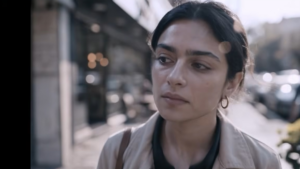
With her comely smile and tousled brunette locks, Tilly Norwood looks like the typical aspiring, young actress with big ambitions. She has 66,000 followers on Instagram. She has her own Wikipedia page. She has gotten loads of press, some good, many bad. Tilly Norwood is also not human.
She is an AI-generated actress created by a subsidiary of AI production company Particle6, led by actor and producer Eline van der Velden. Tilly Norwood has made her ‘acting’ debut in AI Commissioner, an AI-generated sketch. “We want Tilly to be the next Scarlett Johansson or Natalie Portman,” van der Velden reportedly said at a Zurich Film Festival panel discussion in September.
Cue the Hollywood actor protests. “‘Tilly Norwood’ is not an actor, it’s a character generated by a computer program that was trained on the work of countless professional performers – without permission or compensation,” according to a statement from trade union SAG-AFTRA. “It has no life experience to draw from, no emotion.”
Van der Velden penned a mea culpa on her Instagram page after the backlash. “To those who have expressed anger over the creation of my AI character, Tilly Norwood: she is not a replacement for a human being, but a creative work – a piece of art. Like many forms of art before her, she sparks conversation, and that in itself shows the power of creativity.”
But the creation of Tilly Norwood feels less like a threat than déjà vu to Jeff Burke, chair of the theater department and associate dean of research and creative technology at UCLA’s School of Theater, Film and Television.
“The term ‘actress’ is the operative word here,” Burke said, in an interview with The AI Innovator. “Personally, I don’t think it’s the right term. We don’t talk about animated characters as being actors, so I think this phenomenon is pretty specific to what the creators … are trying to frame things.”
Moreover, the AI actress idea “didn’t seem novel to me,” Burke added. “It seemed like the continuation of what we’ve been seeing over the last couple of years with diffusion models and the use of AI-generated media (to produce a) photorealistic creation under somebody’s control.”
His initial reaction to Tilly Norwood was, “This is an interesting way to package it. What are they trying to get out of calling it an actor?” Calling Tilly Norwood “talent isn’t even the right word,” Burke added. “It is an example of a creative IP, like an animated character or something that sits in the popular imagination. Human beings have control over it and are trying to look at commercial ways to make money.”
The furor is understandable but possibly overblown. Burke believes Tilly Norwood is less about replacing human actors and more “connected to how we think about digital images, about things that are trademarks or that we see as characters or created worlds that then get monetized. It’s much closer to that than acting and human performance. … I don’t see it as the future of acting as much as an evolution of digital media.”
However, it’s also not a passing fad or gimmick. “It’s a set of technologies that are going to have a huge creative impact, and so it doesn’t seem to me like a gimmick,” Burke said. “The history of our uses of media, digital characters and computer graphics suggests that these will become part of our media landscape. … It seems hard to avoid it.”
In the same way that past technologies have given Hollywood more creative tools at its disposal to tell stories, Burke believes AI will do the same despite the current handwringing over its potential impact on jobs. “I am personally more interested in the evolution of human creativity and the relationship between creator and audience” and the role AI could play in enhancing it.
Burke said digital media, when it first came about, had a “disruptive impact on analog media” in the entertainment industry. People had to sort through how creators would be compensated. “But it also created an expansion of creativity in terms of who was able to get things out to other audiences,” he said. “ My not-so-evidence-based optimistic perspective is maybe there is an expansion rather than a replacement” of creative work.
Tilly Norwood “feels like a continued expansion of what started with computer graphics and computer-generated characters but has now become more accessible to more budget levels,” he added.
Can AI-generated characters elicit emotions from a human audience? “I think there is evidence that people enjoy computer-generated characters,” he said. “There’s certainly some emotional connection.”
Burke said UCLA is teaching its students to adapt to the AI era: “We want to prepare students to understand enough about the underlying technologies and how they work.” He hopes they can use these tools to boost their creativity as they create stories and characters for different media. “We want people to be familiar with the tools, to be able to use them if that’s where their creative practice is going or their research is going.”
Author

Get the latest insights about enterprise AI.
Subscribe to our newsletter. Thank you.