OpenAI sees AI agents moving rapidly beyond software development into mainstream business work, with adoption in Europe accelerating faster than in the U.S.
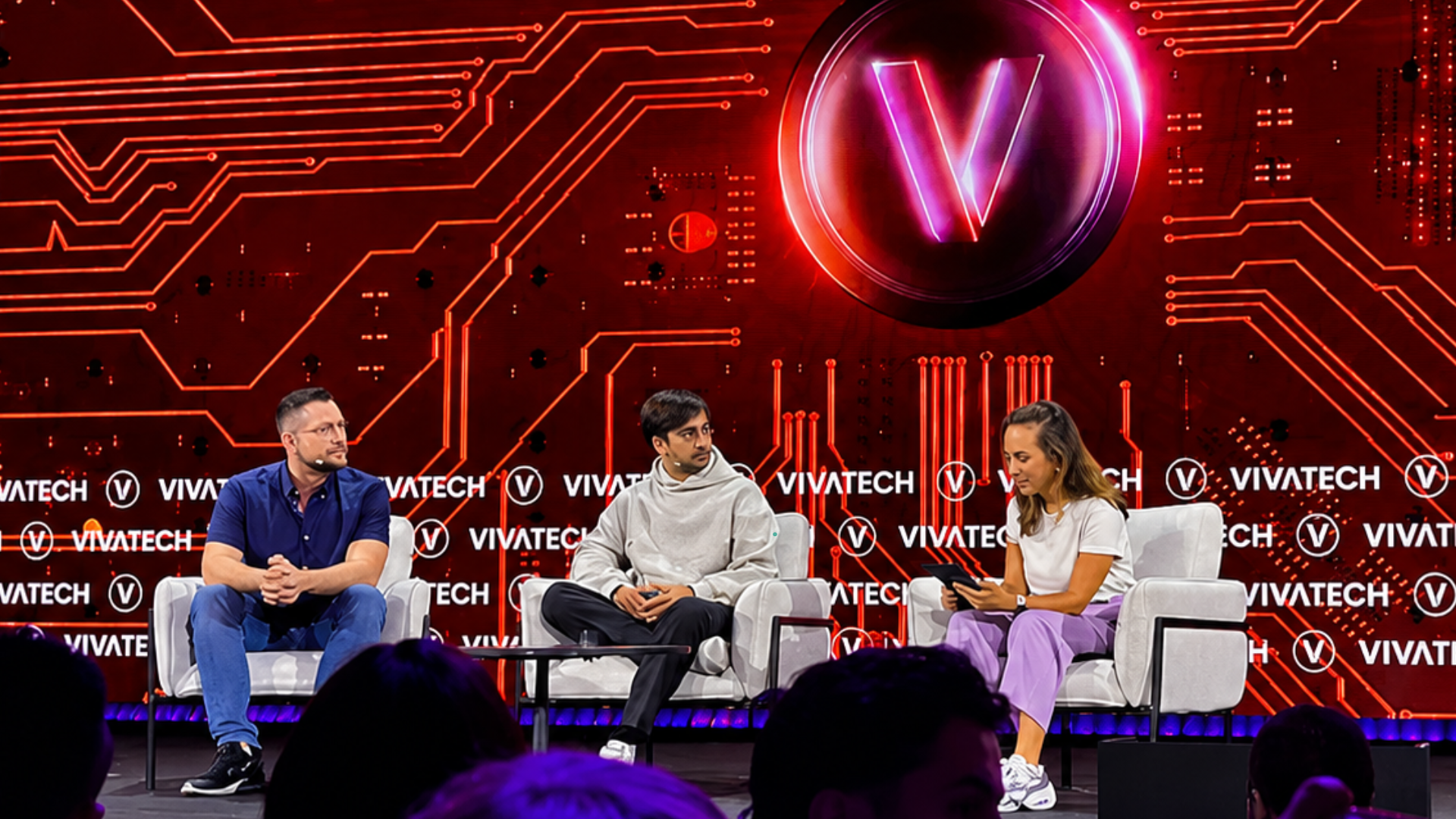
Thibault Sottiaux, OpenAI’s head of core product and platform, and Peter Steinberger, founder of OpenClaw, said at the VivaTech conference today that recent advances in large language models have transformed AI from a conversational tool into a system capable of taking actions, managing workflows and collaborating with other software agents.
The discussion reflected a broader shift underway across the AI industry. Just a year ago, most conversations centered on generative AI chatbots. Now, technology companies are racing to develop agentic AI systems that can reason across multiple sources of information, use tools, execute tasks and operate with increasing autonomy.
“A bunch of things changed,” Sottiaux said at the Parisian tech conference, which sponsored The AI Innovator‘s trip. “The models improved. The models were capable suddenly of dealing with more and more context, using tools efficiently and then running for longer and longer.”
He said improvements in OpenAI’s GPT models, combined with new approaches that allow models greater control over workflows, have made it possible to build agents that independently take actions in digital environments.
Steinberger described the evolution as a shift from humans interacting directly with software toward AI systems increasingly coordinating work on behalf of users.
“We went the level up to talk to AI, and now we went up another level where AI talks to AI,” he said.
Expanding beyond software engineering
The executives noted that coding has served as the proving ground for AI agents because software development tasks are relatively easy to verify. Code either compiles and works or it does not. As models improved, however, the same capabilities began extending into broader business functions.
Sottiaux said OpenAI initially developed Codex, its coding-focused agent platform, for software engineering tasks. But as the company integrated workplace tools such as Google Docs, Notion and Slack, employees began using it for a much wider range of activities.
“We were realizing people at OpenAI are using this for everything,” he said.
Examples included organizing projects, tracking fundraising activities and managing workflows that traditionally required significant manual coordination.
Steinberger recounted how a friend working in finance initially dismissed AI agents as tools designed primarily for programmers. After seeing how he used agents to organize emails and perform everyday computer tasks, the friend began adopting the technology broadly in his own work.
“He thought it’s just for coding, but now he’s using it all the time for all of his finance stuff because it’s actually good for everything now,” Steinberger said.
Safety, trust and human judgment remain critical
The panelists said one of the biggest challenges in expanding AI agents beyond software engineering is teaching models subjective judgment.
While code correctness can be measured objectively, evaluating whether a website design, marketing campaign or speech is good often depends on human taste and preferences.
“Taste” remains an area where humans continue to outperform AI systems, Steinberger said.
The executives also emphasized the importance of safety and governance as agents gain more autonomy.
Sottiaux said OpenAI has invested heavily in developing safeguards to ensure users remain in control of agent actions. The company is working on systems that allow agents to monitor other agents and verify that user intentions are being followed.
Rather than seeing organizations immediately deploying fully autonomous agent workforces, Sottiaux predicted a gradual progression. Individuals will first use personal agents, then automate recurring workflows, and eventually organizations will create teams of specialized agents working together under human supervision.
Steinberger agreed that specialization currently produces the best results.
“I have my personal claw that knows everything about me,” he said. He also described maintaining separate agents for managing a home in Vienna and for handling specific workplace projects.
Europe emerges as a fast-growing market
Although many analysts have portrayed Europe as lagging behind the United States in AI adoption, the speakers painted a more optimistic picture.
Sottiaux said usage of OpenAI’s agent tools has grown rapidly across Europe and cited France as a particularly strong market.
“Adoption has been exploding,” he said. “Codex adoption has increased ninefold this year.”
Surprisingly, he said, the strongest growth is coming from general business users rather than software developers.
“Going from conversation to everyone having an agent” represents the next phase of AI adoption, he said.
OpenAI’s longer-term goal, according to Sottiaux, is to provide what he described as a “personal AGI” that understands a user’s goals, preferences and needs across both professional and personal life.
Personalized software, science breakthroughs
Looking further ahead, both executives predicted AI agents will become increasingly personalized and eventually serve as the primary interface through which people access digital services.
Sottiaux suggested that future software may be generated dynamically by agents rather than delivered through fixed applications. Users could receive customized dashboards, workflows and interfaces tailored specifically to their needs.
“Everyone is just going to have their personal agent that understands your goals and your preferences better than any other software,” he said.
The pair also predicted that advances in AI will accelerate scientific discovery. By 2030, Sottiaux said, breakthroughs in biology, chemistry and medicine could become routine rather than exceptional.
Despite concerns that AI could reduce the need for software companies, neither executive expects traditional software infrastructure to disappear. Instead, they anticipate continued investment in databases, enterprise systems and other foundational technologies that support agent ecosystems.
For Europe, both speakers argued that the rise of AI agents presents an opportunity rather than a threat. Steinberger praised the region’s growing ecosystem of AI startups, while Sottiaux highlighted Europe’s focus on solving practical, human-centered problems.
“I think there’s incredible energy in Europe to build and do things that are useful,” Sottiaux said. “Being rooted in solving real problems for humans is awesome.”
Author
Get the latest insights about enterprise AI.
Subscribe to our newsletter. Thank you.