- The AI Action Plan prioritizes rapid innovation and deregulation, replacing many Biden-era oversight measures.
- Critics say it weakens safety and equity protections by relying on voluntary industry commitments.
- The plan uses AI to boost U.S. geopolitical power while focusing on workforce retraining over job protections.
This week, the White House unveiled ‘America’s AI Action Plan,’ a sweeping 25-page policy document that reflects President Trump’s vision of using AI to reassert U.S. dominance in the global tech race.
The ‘American AI’ strategy favors rapid innovation over regulatory caution, and critics say it leans heavily on deregulation and private sector self-governance at the expense of public safeguards.
The plan outlines a three-pillar approach: accelerating AI innovation, building AI infrastructure and leading in international AI diplomacy. It dismantles much of the Biden-era AI oversight framework, calls for aggressive energy and semiconductor investments, and explicitly seeks to export “American values” through AI standards and technologies.
“It is a national security imperative for the United States to achieve and maintain unquestioned and unchallenged global technological dominance,” Trump said in introduction. The plan describes AI as the catalyst for a new industrial revolution, information revolution and artistic renaissance.
But the philosophical underpinnings are as much political as technological. The plan seeks to remove “ideological bias” in AI models as well as references to diversity, equity and climate change from federal AI frameworks. It mandates that federal agencies contract only with developers whose systems are “objective and free from top-down ideological bias.” In the legal system, it proposes tools to combat deepfakes, but does not mandate any specific AI safety standards.
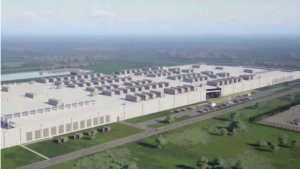
In the action plan, the administration rejects what it calls “radical climate dogma” and “onerous regulation.” It proposes new categorical exclusions from environmental review to speed data center construction – invoking the phrase, “Build, Baby, Build!” – and calls for widespread deployment of nuclear and geothermal energy sources to power AI infrastructure.
Matt Eastman, senior vice president at research firm IDC, said the AI Action Plan “signals a significant shift to accelerate U.S. AI leadership by prioritizing infrastructure and open innovation. While it removes critical friction points for enterprises, it does leave some big questions around oversight, equity and long-term security that the market – and regulators – will need to grapple with.”
For instance, streamlining permits and energy policies to accelerate the building of AI data centers should remove a bottleneck for scaling AI workloads, which are among the top barriers to deploying AI more broadly, according to IDC. But it risks raising environmental and local governance concerns.
“Although the plan talks of ‘the’ AI race, there are actually two races: a race for dominance with AI tools, and another race to see who can first build dystopian, uncontrollable superintelligence that can replace all human jobs.” – MIT professor Max Tegmark
The plan also seems one-sided to renowned MIT professor Max Tegmark, who is also president of the Future of Life Institute, an AI safety advocacy nonprofit.
“Although the plan talks of ‘the’ AI race, there are actually two races: a race for dominance with AI tools, and another race to see who can first build dystopian, uncontrollable superintelligence that can replace all human jobs,” Tegmark said. “The U.S. should shun that second race, which top AI researchers and CEOs have warned could cause human extinction, and instead focus on developing controllable and reliable AI systems that solve actual problems facing Americans today.”
Daniel Aguirre, executive director of the Institute, added that the White House must do more than rely on voluntary safety commitments by AI companies. “We wouldn’t accept corporate pinky promises with pharmaceuticals, air travel or nuclear power – why would we do so with AI?”
In the plan, the administration sees AI as a tool of geopolitical power. It calls for extending U.S. export controls, tightening chip supply chains and exporting a “full stack” of American AI technology to allies, while isolating China from global AI standards bodies. It proposes that the Commerce Department monitor foreign AI systems for ideological alignment with adversarial regimes.
Meanwhile, workforce protections are framed as skill development and rapid retraining. The plan reiterates Trump’s commitment to “American workers first,” but offers no mandates to slow automation or protect jobs. It instead encourages employers to use tax-free reimbursement for AI training and calls for new apprenticeships in AI infrastructure jobs.
The plan does signal interest in AI oversight in national security contexts, such as AI-generated biological threats and adversarial use of AI in infrastructure. But here too, the measures rely largely on coordination with industry and intelligence agencies, rather than hard rules.
“Americans across the ideological spectrum are deeply concerned about the social, economic and existential risks of unchecked AI,” Aguirre said. “They’re broadly supportive of common-sense guardrails. … The administration must do the same.”
Author

Get the latest insights about enterprise AI.
Subscribe to our newsletter. Thank you.