It’s long been accepted that data centers consume significant amounts of energy. Let’s put the amount of consumption into perspective: Data centers are projected to use 26% more electricity in 2026 compared with 2025.
Given that fossil fuels are still used to generate over 50% of all electricity globally, it’s clear that current levels of data center power consumption is incompatible with the worldwide need to reduce emissions. However, a sustainable data center is not an oxymoron.
For the standard power efficiency rating, PUE (Power Usage Effectiveness), a perfect score is 1.0. Each decimal above 1.0 represents more energy being consumed by cooling, power conversion, lighting and other non-compute uses. Google’s worldwide data center fleet averages a PUE of 1.09, with two campuses in the U.S. down to an estimated PUE of 1.04. The industry standard is 1.56.
However, much smaller data center projects are achieving similarly world-class PUEs and impressive levels of compute power.
Consider these four examples in Europe:
- EcoDataCenter, Sweden: 1.2 PUE, 80MW capacity
- Lefdal Mine Data Center, Norway: 1.15 PUE, up to 200MW capacity
- Verne, Iceland: 1.06 PUE, 140+MW capacity
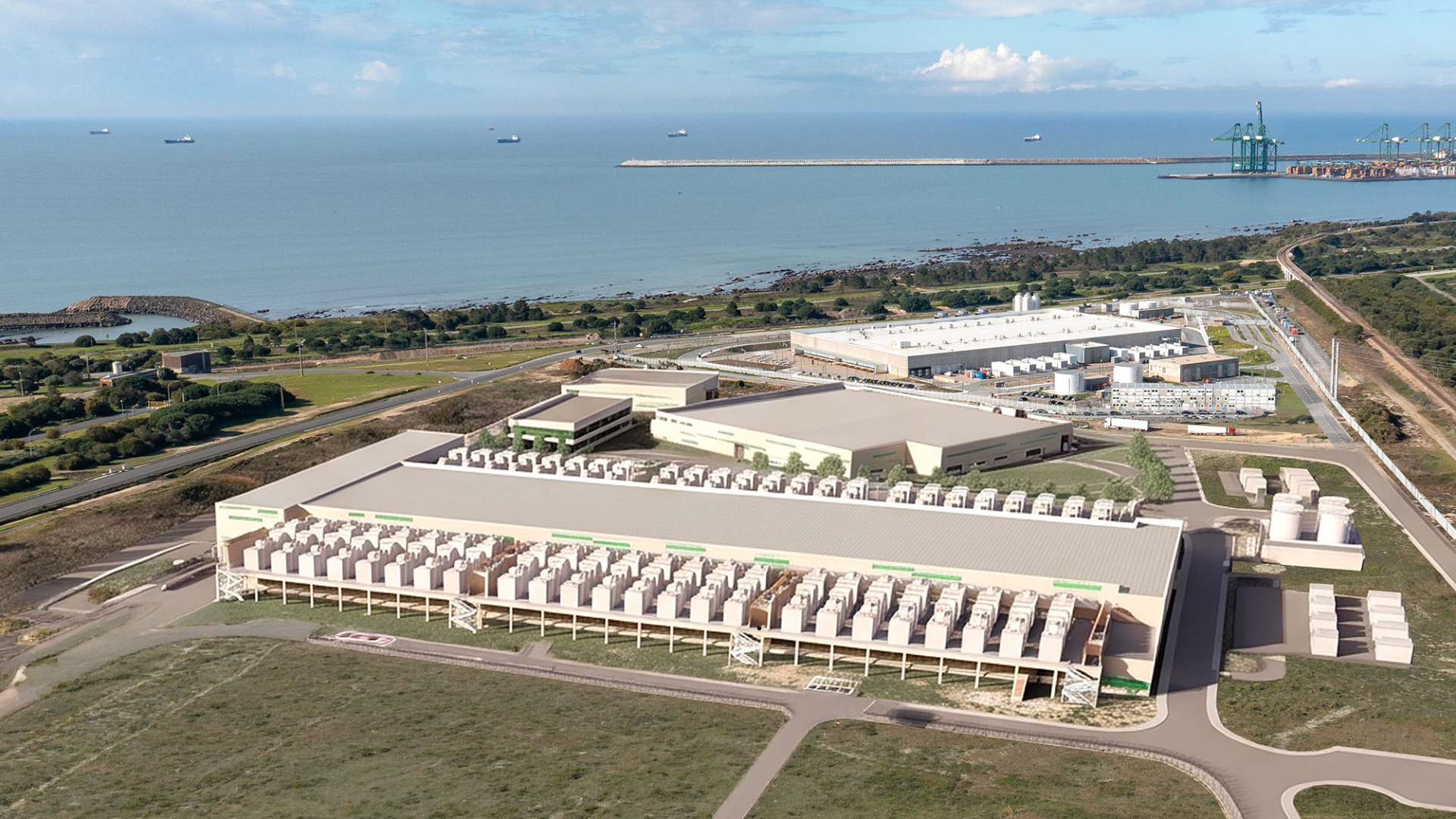
- Start Campus SINES DC, Portugal (projected): 1.1 PUE, 1.2 GW capacity
Collectively, their customers, partners, and investors include BMW, BNP Paribas, Nvidia, Microsoft, and more. While each of them has its own unique characteristics, those looking to replicate their successes should have these three considerations in mind from the start.
Replicating sustainable data centers
- UPS architecture
Since downtime directly translates to lost money, Uninterruptible Power Supply (UPS) is the lifeblood of a data center – and one of the biggest single factors in calculating its PUE. Many data centers have over-provisioned or taken a cautious approach, prioritizing extra energy capacity or 2N redundancy at the expense of efficiency. (2N redundancy refers to two independent power systems, each of which can carry the entire load by itself.)
However, UPS equipment itself is now capable of running at 99% energy efficiency in eco modes while retaining full 2N redundancy. Sweden’s EcoDataCenter, for example, operates at a 1.15 PUE.
Moreover, these data centers have adopted a modular design approach to grow capacity with demand rather than over-provision from the start.
Norway’s Lefdal Mine, for example, has up to 120,000 square meters (1.3 million square feet) of available white space (usable floor area where IT equipment is installed) and lets clients reserve capacity so they can plan capital expenditures ahead of time and meet their exact needs.
- Power purchase agreements
A power purchase agreement (PPA) is one of the major pillars of a data center’s entire carbon profile. Without one in place, a facility can’t be certain it is using 100% renewable energy – and that certainty is now table stakes for many customers looking to meet their own climate commitments.
It’s possible to secure a PPA before construction even starts, but it requires a builder to know not just the designed full capacity of a facility, but also how much is needed for each phase.
For example, Portugal’s SINES DC will have six facilities and 1.2GW of capacity when completed; its PPA locked in long-term affordable prices for energy. Iceland’s Verne claims it is saving 80% on energy costs compared to major European data center markets thanks to its own long-term contracts.
- Certification preparation
Trying to attain ISO 14001:2015/2026 (a global environmental management standard) or LEED certifications (for energy efficiency and environmental impact) or join collectives such as the Climate Neutral Data Centre Pact (European data centers’ sustainability commitment) after building has started is like trying to cook with one hand tied behind your back.
The evidence these certifications require is accumulated during the build process, and it’s often difficult or expensive to change key design choices after the fact to accommodate requirements, especially when using innovative cooling techniques like SINES DC’s repurposed seawater infrastructure, or EcoDataCenter’s adiabatic (water evaporation) cooling system, which is transitioning from potable to non-potable water.
By thinking ahead, it’s possible to not only receive these globally recognized certifications, but also add data center-specific certifications such as OCP Ready Hyperscale v2 for facilities designed to support large-scale, high-density computing.
Both sustainable and efficient
As we approach critical climate years like 2030 – scientists believe greenhouse gas emissions must fall sharply by then to realistically limit warming – data centers’ growing electricity demand must be addressed as part of the larger conversation around energy generation and usage.
These four data centers demonstrate that sustainability and compute power don’t have to be at odds. By taking a holistic approach from the very beginning, it’s possible to replicate the success of these data centers and others like them around the world.
Author

Get the latest insights about enterprise AI.
Subscribe to our newsletter. Thank you.