
Part I of this article argued that, flux and uncertainty notwithstanding, organizational leaders should proceed with AI implementation, guided by lessons from previous major technology initiatives and current findings about AI implementation. Short case studies illustrated three categories of AI change.
Part II shows how to go about capturing AI’s biggest organizational payoff – transformational change, not incremental improvement – by employing a systems model for change.
First, we categorize the AI implementation cases. Next, we present the change model and apply it to the examples from Part I. Then, we’ll offer another example of a systems transformation because that’s where successful implementation that produces the most value lies.
Several frameworks exist for categorizing different levels of AI adoption. We like the one developed by economists Ajay Agrawal, Joshua Gans, and Avi Goldfarb in their book ‘Power and Prediction: The Disruptive Economics of Artificial Intelligence.’ [i]
Point solutions – application solutions – systems solutions
How might we gainfully differentiate these solutions in order to guide our thinking about AI implementation? Agrawal, Gans, and Goldfarb put AI innovation into three categories:
1. Point solutions improve an existing procedure and can be adopted independently. The first case, the Americal Express fraud detection case, presents a speeding up of existing processes, and this is a point solution. We note that point solutions can add valuable efficiencies and as a result, economic value.
2. Application solutions that enable a new procedure – or multiple procedures – without changing the system in which it is embedded. The John Deere herbicide case in Part 1 qualifies as an application solution. Traditional spraying equipment didn’t make decisions at all – it broadcast herbicide uniformly across fields regardless of what was growing. See & Spray introduced a new decision: spray or don’t spray, plant by plant, in real time.
That decision didn’t exist before. The surrounding system – tractors, field preparation, harvest workflows – doesn’t need to change for See & Spray to deliver value. The company also innovated its pricing model in parallel, shifting to subscription-based licenses invoiced by the acre, so farmers only pay when the technology is actively saving them money.
3. System solutions are the most transformational and enable new procedures by changing multiple processes simultaneously.
The sequencing in the Blackstone Legal and Compliance case in Part 1 is what makes this a system solution rather than an application solution. AI alone, dropped into the old workflow, would have produced marginal gains. The gains came from simultaneously changing the decision architecture (who decides what, and when), the talent model (senior experts freed for high-value work), the technology layer (AI triage and routing), and the organizational incentives around speed and quality.
The result: reviewer productivity gains of 30% or more, the capacity to handle 25% more volume with no additional headcount, and an estimated $5 million in annual run-rate savings by 2027. As one McKinsey partner observed, this case study illustrates a principle that applies far beyond legal teams – AI becomes a powerful accelerant when decision flows are clarified first, and a band-aid when they aren’t.
Table I: AI Solution Types Exemplified
| Solution type | Example |
| Point: Improves an existing procedure and can be adopted independently without changing the system | American Express fraud protection |
| Application: Creates a new procedure or multiple procedures that can be adopted independently | John Deere See & Spray |
| Systems Transformation: Enables new procedures by changing multiple, dependent procedures | Blackstone Legal & Compliance |
Applying a model of organizational change
The Work Systems Model (Figure 1) is a systems model that presents eight aspects of the work environment built by organizations that surrounds individuals. Those aspects combine to make some behaviors make more sense to people than others. The aspects may together facilitate cooperation or competition, quality or volume, or cross-selling – or not.
The eight aspects drive ‘the way we do things around here,’ or what many term culture. Changing them significantly and in a coordinated fashion changes which behaviors and ways of working make sense, including whether and how employees use AI. Envisioning the behavior and stories that would define an AI-enabled future helps focus the strategy. Leaders can then intentionally redesign these aspects of the work environment, turning them into levers of change.
Figure 1
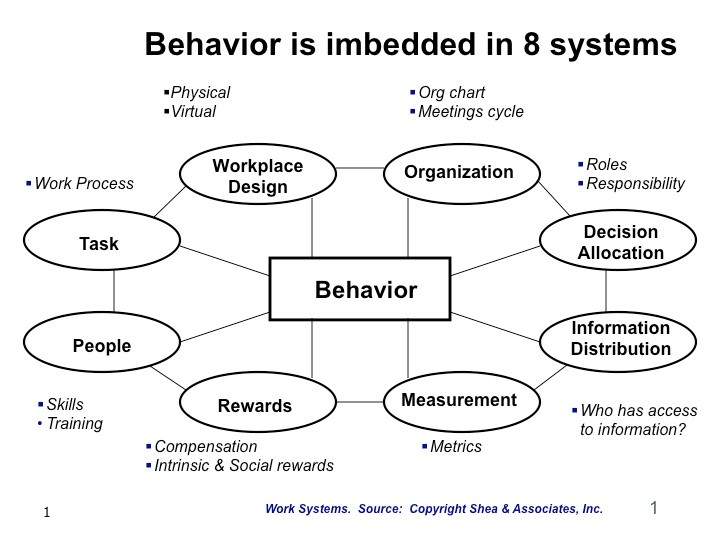
Table II applies this framework to the three examples provided in Part I.
Table II: Solution type combined with the Work Systems Model
| Solution type | Example | Utilizing Work Systems Model |
| Point: Improves an existing procedure and can be adopted independently without changing the system | American Express fraud protection | -Immense increase in data about card transactions (Measurement + Information Distribution) -Generates fraud decisions in milliseconds (Decision-Making) The machine learning tool is an example of Workplace Design. |
| Application Creates a new procedure that can be adopted independently | John Deere See & Spray | -Better information, plant by plant, about which plants need to be sprayed (Measurement + Information Distribution). -Individual plant spray decision (Decision-Making) -Changed pricing model (Task) -Farmers pay only for what they use (Reward) |
| Systems Transformation Enables new procedures by changing multiple, dependent procedures simultaneously | Blackstone Legal & Compliance | -Created a new set of rules (Task) -Clarified ownership (Decision-Making) -Created explicit escalation paths (Task/Decision-Making) -Standardized review process (Task/Decision-Making) -Free up senior experts for higher value work (People) -AI tools check for consistency across thousands of documents (Workplace Design) -Handle 25% increase in volume by 2027 without additional headcount (Reward) |
From point solution to systems transformation – Ingka/Ikea
Leaders of organizational change can, of course, begin with a goal of systems transformation or they can start with a point solution that evolves into something more significant over time, particularly when they envision a broader desired future.
Initially, Ingka group (Ikea’s largest franchisee) trained a chatbot to handle customer calls. It succeeded in giving personalized product information to customers 24/7, reducing wait times, and improving customer satisfaction.[ii]
With this success, Ingka could have laid off 8,500 people. Instead, they analyzed what people asked the bots to do that the bots couldn’t provide, namely interior design assistance. Therefore, they stumbled onto a large, untapped market opportunity thanks to the data that the AI chatbots had uncovered. Ingka retrained 8,500 employees to offer design services. The new channel brought in $1.7 billion in 2024 and is projected to keep growing.
The race to use AI tools to replace the workforce may, perhaps in many cases, prove misguided. Research conducted by consulting firm Robert Half found that 32% of U.S. hiring managers and 34% of Canadian hiring managers who eliminated a role primarily because of AI later rehired for the same or a similar position – an emerging reversal Fast Company has called the ‘AI Boomerang’.[iii],[iv] Instead, the authors believe that many opportunities exist to move from the point solutions to broader transformation with system solutions.
To do so, leaders first need to know where they wish to play, at least initially, what part of the field you are playing on – point, application, or system solution – and how to move from one to the next.
Case examples of point and application solutions abound, but system solutions are still rare. Systems solutions require greater imagination and more extensive redesign. Significant gains for the business reside in all three AI applications, but greater and coordinated organizational change can extract more of AI’s benefits. So, using a tried-and-true systems model of change can help leaders unleash more of AI’s very real that potential, regardless of the state or stage of the macro-AI revolution.
[i] Ajay Agrawal, Joshua Gans, and Avi Goldfarb, Power and Prediction: The Disruptive Economics of Artificial Intelligence (Boston: Harvard Business Review Press, 2022).
[ii] Davis, Stephanie. “Instead of Laying Off 8,500 Workers Because of AI, Ikea Used This Radical Leadership Playbook to Grow Revenue.” Inc., June 23, 2026. https://www.inc.com/stephanie-davis/layoffs-workers-ai-ikea-leadership-playbook-grow-revenue/91364108.
[iii] Robert Half,August 13, 2026, https://www.roberthalf.com/gb/en/about/press/is-the-uk-set-for-a-wave-of-ai-correction-recruitment
[iv] “The AI Boomerang’: Why some companies are rehiring employees they laid off due to AI, June 5, 2026. https://www.fastcompany.com/91554983/ai-boomerang-why-some-companies-are-rehiring-employees-they-laid-off
Authors


Get the latest insights about enterprise AI.
Subscribe to our newsletter. Thank you.