TLDR
- Slack wants to become the front door to enterprise AI. Instead of juggling multiple apps, employees can ask Slackbot to coordinate tasks across CRM, email, analytics and AI agents with a single prompt.
- The next AI battle is orchestration. Salesforce is betting that the biggest opportunity isn’t building better models but coordinating fleets of AI agents across enterprise systems using MCP.
- Humans stay in control. Slackbot respects existing user permissions and requires approval before taking important actions, aiming to balance automation with security and governance.
When a salesperson walks out of a customer meeting today, the routine is familiar: update the CRM, notify the sales team, schedule a follow-up, draft an email, log meeting notes and set the next reminder.
Slack CMO Ryan Gavin wants the entire workflow to happen with a single conversation with Slackbot, the popular messaging app’s AI assistant.
“Just pull up Slackbot, hit the record button,” Gavin demonstrated during an interview with The AI Innovator. “‘Hey Slackbot, just got out of a meeting with Pepsi. Make sure we update that opportunity to 200,000. Send a note back to my working channel, let them know that the meeting went really, really well. Also, update the field that lets them know I should talk to them in about two weeks, and prepare an email to send this response for the follow-up of the meeting.”
“Done. Six things just happened with that one prompt,” Gavin explained. “The system of record got updated so some manager someplace is really happy when you’re keeping a good log of the customer truth. The team working in the channel got an update about this meeting simply, easily. The individual got an email written that’s ready for them to review and send back to the account. And they all did it just by talking to Slackbot in 30 seconds.”
“Customers are going gaga over this.”
Gavin’s demonstration illustrates a broader shift underway in enterprise AI. Rather than building ever more capable chatbots, technology companies are racing to turn AI into an orchestration layer that can coordinate work across dozens of business applications.
Slackbot as the command center
For Salesforce, that strategy centers on Slack.
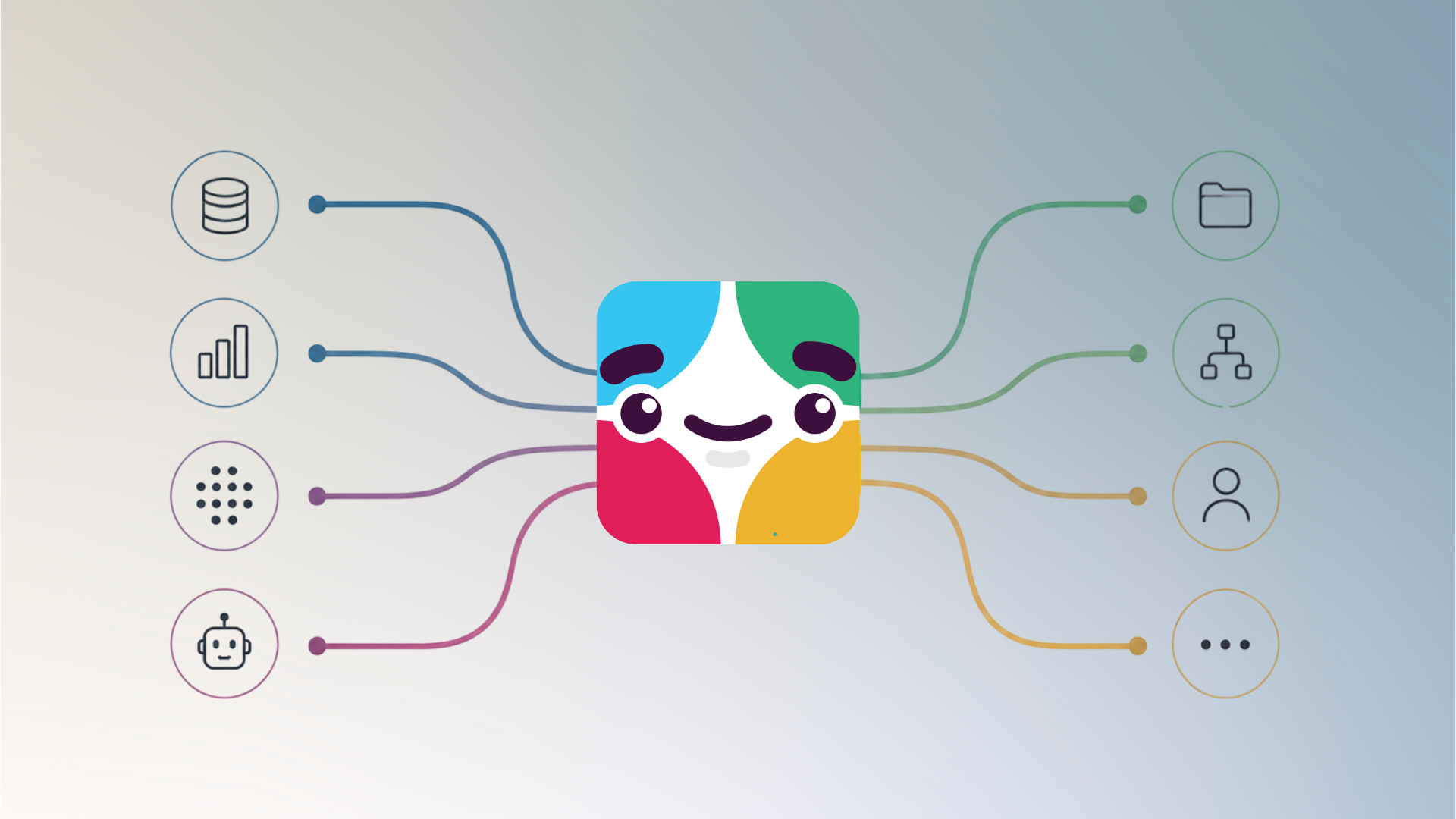
Today, the company is introducing new Model Context Protocol (MCP) capabilities that allow Slackbot to interact directly with Salesforce’s CRM, Tableau analytics, Data 360 and Agentforce AI agents through dedicated MCP servers. More than 20 partners, including Atlassian, Box, Canva and DocuSign, are also building MCP-powered integrations that allow Slackbot to invoke their services from within a Slack conversation.
MCP, an open protocol introduced by Anthropic last year, has quickly emerged as one of the enterprise AI industry’s preferred standards for connecting large language models to business applications and data sources. Instead of developers creating custom integrations between every AI assistant and every enterprise application, MCP provides a common interface that allows AI systems to securely discover tools, retrieve information and trigger actions across multiple systems.
In Salesforce’s implementation, Slackbot acts as an MCP client. When an employee asks Slackbot to perform a task, the assistant determines which systems or specialized AI agents are needed, queries them through MCP and assembles the results into a single response.
Customers are going gaga over this.
That orchestration extends beyond Salesforce’s own software.
In preparing for a customer meeting, for example, Slackbot could simultaneously consult a sales agent, customer support agent, finance agent and meeting-preparation agent before presenting a consolidated briefing — without requiring employees to know which agents existed or where they resided.
“When I ask my Slackbot, ‘I’m getting ready for this meeting with IBM. Give me a comprehensive overview,’ it can go and query six different agents,” Gavin said. “I didn’t have to know about any of those.”
The company argues that this model addresses a growing challenge as enterprises deploy increasing numbers of AI agents.
“For some companies it’s true today — and many companies it’ll be true in the next two to three years — they’re going to have way more agents inside an organization than they’ll have employees,” Gavin said. “How do all your employees know about all those agents? How do they know how to use them and what they do? When to deploy them or not? The truth is, they’re just not going to.”
Instead of asking workers to learn dozens or hundreds of specialized assistants, Salesforce envisions Slackbot becoming what Gavin described as a trusted entry point that understands an employee’s permissions, enterprise systems and available AI agents.
Battle for the workspace ecosystem
The strategy reflects a broader battle unfolding across enterprise software.
Microsoft is positioning Teams and Microsoft 365 Copilot as the hub for AI-powered work. Google is embedding Gemini throughout Workspace. ServiceNow is centering AI around enterprise workflows, while SAP and Oracle are integrating AI into their business applications.
Salesforce’s bet differs in one important respect. Rather than centering AI around productivity software or enterprise applications themselves, it is attempting to make the conversation the interface through which employees interact with business systems.
The approach depends heavily on Slack’s role as a collaboration platform where work already occurs.
Gavin argued that much of an organization’s institutional knowledge exists not inside structured databases but within years of conversations captured in Slack channels. Those conversations, combined with enterprise systems such as CRM records and analytics platforms, provide richer context for AI than either source alone.
“If you could intelligently tap into the last 10 years of any organization — all the knowledge, all the conversations, all the strategy that happened there — and have a way to have access to that at your fingertips for any employee, how valuable would that be?” he said. “That’s exactly what’s happening with Slack and Slackbot.”
Keeping humans involved
For enterprise technology leaders, however, the appeal of broader AI orchestration comes with familiar governance questions.
Allowing AI assistants to access CRM systems, financial information and internal conversations raises concerns about security, permissions and accountability.
Gavin said Slackbot inherits each employee’s existing permissions rather than receiving broader access, ensuring it can only access the same information available to that individual. He also said Salesforce does not use customer data to train large language models.
The system is designed to keep humans involved before completing consequential actions. If Slackbot drafts an email or prepares another action, users are asked to review and approve the result before it is executed. Moreover, Slackbot displays which enterprise systems it queried and cites the sources behind its responses so employees can inspect how answers were generated.
Whether organizations will primarily use Slackbot as their new interface remains to be seen.
Many organizations have already invested heavily in Microsoft 365, Google Workspace or internally developed AI assistants. Convincing them to make Slack the primary interface for enterprise work will require more than new integrations.
Still, the announcement signals that the next phase of enterprise AI competition may be less about building smarter models than about owning the place where work happens. As AI agents proliferate across organizations, the companies that can coordinate those agents — rather than simply build them — may hold the strategic advantage.
Author

Get the latest insights about enterprise AI.
Subscribe to our newsletter. Thank you.