Artificial intelligence is no longer a supporting actor in the modern workplace. Across enterprises, AI-driven tools are becoming the lead. They are enabling employees and non-employee workers alike to complete tasks faster and deliver complex and scaled output in record time.
While this boost in productivity promises enormous gains, it also exposes the growing inability of traditional HR and workforce management systems to keep pace. Work is now executed with a velocity these systems were never built to accommodate. This gap between speed and governance is both a challenge and an opportunity, particularly for organizations seeking to harness AI while maintaining compliance, oversight, and operational continuity.
The rise of the extended workforce
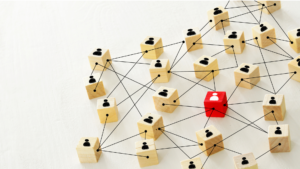
At the core of this shift is the extended workforce – contractors, consultants, gig workers and independent talent – whose work often falls outside standard payroll and HR infrastructure. This is especially so as enterprises increasingly treat work as an outcome rather than a function of title or employment status.
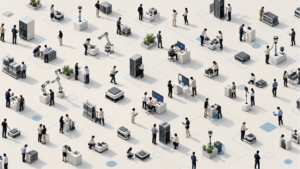
In practice, this means project teams may include a mix of full-time employees, temporary workers, and even AI-driven agents who all collaborate on the same deliverables. This unprecedented agility comes with a complex governance puzzle: approvals, onboarding, classification and compliance checks often lag behind the speed at which work is conceived and delivered.
AI-driven productivity and workflow friction
For HR teams, this new reality is making traditional metrics and workflows less relevant. Tasks are more modular, project timelines are shorter, and roles are more fluid. Employees leverage AI to focus on higher-value work, while 74% of independent contractors report using the same tools to scale their capabilities and deliver sophisticated outputs quickly.
This acceleration exposes friction points in HR processes. Tasks that previously could be completed over days and weeks – candidate vetting, identity verification, and role classification – now must happen in hours or even minutes to remain competitive. Without timely governance, organizations face heightened risks like misclassification, proxy labor, unauthorized substitutions, and cross-border compliance violations that are all more likely when labor moves faster than oversight.
Rethinking measurement
AI-driven acceleration is also reshaping how work is measured. Traditional metrics like hours worked or headcount offer diminished insight into the actual value being delivered. Instead, outcomes-focused metrics and capability-based workflows are emerging as the more relevant yardsticks.
Organizations that can orchestrate their human and AI contributors around clear deliverables, risk thresholds and compliance standards gain both efficiency and strategic advantage. This shift reframes HR from a gatekeeping function into a true growth enabler where stewardship and orchestration replace rigid control.
This shift reframes HR from a gatekeeping function into a true growth enabler where stewardship and orchestration replace rigid control.
Several strategies are proving effective for organizations navigating AI-driven speed:
1. Modular workflow design: HR and operations teams must structure work around capabilities and outcomes, rather than fixed job roles or predefined timelines. This approach allows human workers and AI systems to collaborate more fluidly without overloading compliance checks.
2. Risk-oriented automation: Advanced verification tools such as AI-driven identity vetting, liveness detection, and credential validation help mitigate candidate fraud and misclassification while keeping pace with accelerated work streams. Organizations maintain oversight without creating bottlenecks by combining technology with process safeguards.
3. Integrated talent ecosystems: Viewing full-time employees, contractors and independent professionals as part of a single workforce ecosystem enables organizations to deploy labor where it delivers the greatest impact. Common governance rules, clear engagement policies, and outcome-based expectations allow HR to scale non-employee labor without introducing administrative chaos.
4. Outcome-driven measurement: With AI compressing timelines and expanding capacity, evaluating performance based on deliverables rather than hours worked or formal titles ensures alignment with business objectives. This helps HR demonstrate the value of integrating human and AI capabilities in a measurable and strategic way.
The stakes of falling behind
Failing to keep HR processes aligned has real consequences. Compliance issues emerge, projects hit unexpected obstacles, and organizations risk damaging their reputations when governance lags behind work. Conversely, companies that adopt AI while redesigning HR processes around adaptability and real-time oversight can both gain speed and reshape how work contributes to the business.
It is clear that enterprises will not simply return to traditional workflows. AI adoption will continue to compress project timelines and increase the complexity of the workforce, which blurs the lines between employees, contractors and automated agents. HR and operational leaders who focus on creating flexible systems that link work directly to organizational goals will be able to respond effectively.
The AI-driven workplace is here. The question for organizations is not whether to adopt these tools, but whether their HR and workforce systems are ready to keep up. Success will go to those that treat labor, compliance and AI as interconnected elements of a single, dynamic system that is managed thoughtfully and in step with the pace of the business.
Author

Get the latest insights about enterprise AI.
Subscribe to our newsletter. Thank you.