TLDR
- Napster is back, reinventing itself from a pioneering music-sharing service into an AI company selling digital co-workers, conversational agents and holographic assistants.
- Napster is betting on lifelike AI agents with personalities, persistent memory and the ability to collaborate on tasks, rather than relying on traditional text-based chatbots.
- The company faces stiff competition from Microsoft, OpenAI, Anthropic and Salesforce, but hopes its recognizable brand and model-agnostic technology will help it stand out.
When Ziv Navoth walks into a technology conference, he has something most startup executives would envy: Name recognition.
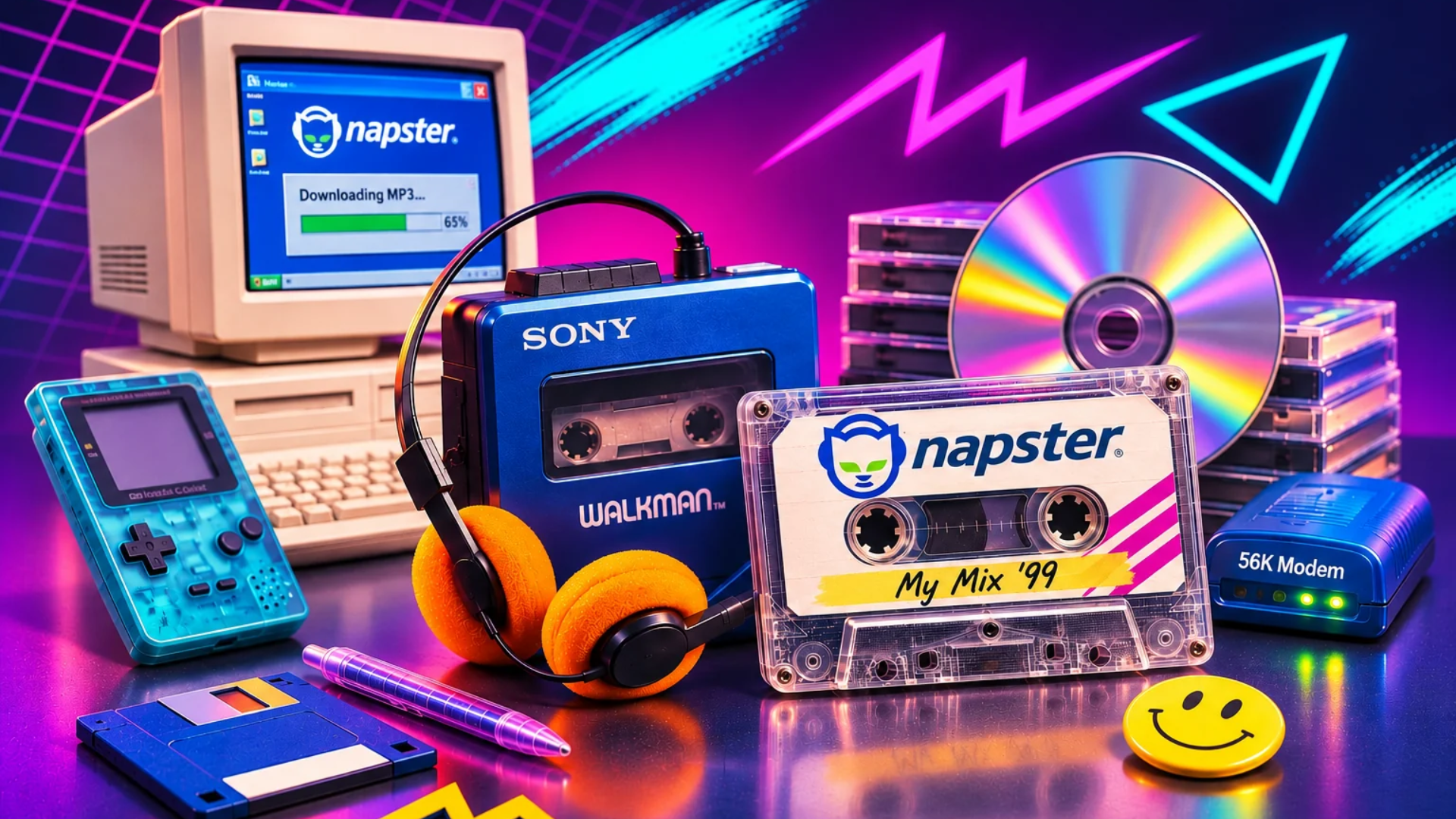
The chief product officer of Napster doesn’t need an elaborate elevator pitch or a PowerPoint presentation to break the ice. At a conference in Aspen, Colorado, he showed up wearing a Napster beanie, carrying a cassette player with orange headphones and handing out old-fashioned mixtapes.
The reaction was almost inevitable.
“Wait, that Napster?” people asked, Navoth recalled in an interview with The AI Innovator.
“Yes,” he replied.
For executives of a certain age, the name brings back memories of dial-up internet, Winamp playlists, Britney Spears, the Backstreet Boys and the exhilarating possibility of downloading almost any song without paying for it.
For Navoth, it opens doors.
“Napster just has this nostalgia that, for a certain demographic, holds a really warm spot in their heart, and that just makes it very cool to start a conversation at a personal level,” he said.
There is, however, a small complication: The Napster that made Metallica furious and millions of college students happy bears little resemblance to the company Navoth represents today.
The onetime music-sharing outlaw is now selling AI agents to businesses, AI co-workers to employees and even holographic assistants that appear to float above laptop screens.
Apparently, 1999 called. It wants its brand back – and perhaps a personal AI chief of staff.
From MP3s to AI employees
Founded in 1999 by Shawn Fanning and Sean Parker, Napster became one of the internet’s first great disruptors by allowing users to exchange MP3 music files directly with one another.
For a generation accustomed to buying $15 CDs to hear two favorite songs, the proposition was irresistible. For the recording industry, it was a nightmare.
Metallica sued. Record labels followed. Napster became a symbol of the battle over digital copyright, eventually shutting down its original file-sharing service in 2001 after losing a series of legal fights.
But the brand refused to die.
Napster’s assets were acquired out of bankruptcy by Roxio in 2002, which relaunched the name as a legal music service. Best Buy bought the business in 2008 but it still struggled, and Rhapsody, a paid music streaming service, acquired it in 2011. Rhapsody later adopted the Napster name. The company continued operating as a subscription music-streaming service, competing in a market increasingly dominated by Spotify, Apple Music and other giants. In 2020, Napster switched owners again: MelodyVR, a VR concerts company.
In 2022, Napster entered yet another phase when it was acquired by a consortium involving Hivemind Capital Partners and Algorand, with plans to explore Web3 and blockchain-based music experiences.
Then came the next reinvention.
Infinite Reality, a company focused on immersive digital experiences, acquired Napster last year in a deal valued at $207 million. The new owner shut down the music streaming service and repositioned Napster as an AI company that provided digital agents.
Infinite Reality also acquired Touchcast, an enterprise technology company specializing in AI-powered video and virtual experiences. Navoth joined Napster through that acquisition in April 2025.
Even he had to do a double take.
“Wait, what? Napster? That Napster?” he recalled thinking.
Navoth remembers the original Napster well. In the late 1990s, he was working at a Wall Street research institute studying how record labels should respond to the emerging MP3 format.
The industry was reluctant to embrace digital distribution. Napster made that reluctance irrelevant.
“I remember discovering entirely new genres just through the folders on other people’s computers, and for me, it changed my life,” he said.
Now he sees a parallel between Napster’s original mission and its latest ambitions.
The old company helped democratize access to music, albeit through a business model that ran into serious copyright problems. The new one, he argues, wants to democratize access to expertise.
That means giving ordinary workers the kind of administrative and professional support traditionally reserved for executives.
The music may have changed, but Napster is still trying to disrupt somebody’s business model.
So what exactly does Napster sell now?
The answer requires more than one track.
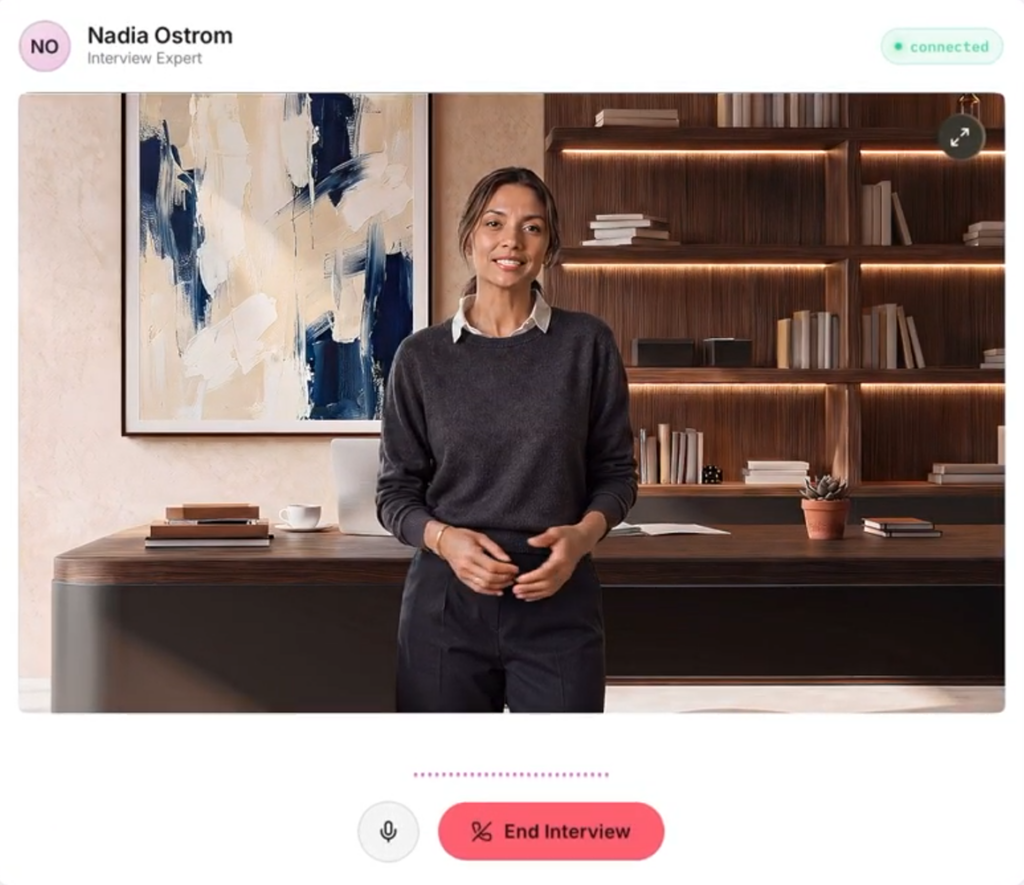
Napster provides AI agents that are embodied in lifelike avatars. These agents can hear, understand and talk to users in 60 languages. In some cases, they can see users too, according to the company.
At the Microsoft Ignite conference, the company plans to introduce an enterprise version of AI crews, a desktop application that lets employees build teams of specialist AI agents.
These browser-using agents can pass work to each other, remember previous interactions and, with permission, connect to applications such as Salesforce, HubSpot and email accounts.
Napster also offers a conversational learning platform for educational institutions and companies that want to provide personalized instruction at scale. Napster Pulse is an AI interviewing platform that conducts conversations with employees, customers or others and analyzes responses. A self-service version is scheduled to be announced at Microsoft Ignite.

Luna is a Napster AI agent that vocally chats with users and co-creates songs with them.
Napster View is a device that attaches to a computer and presents a three-dimensional AI avatar without requiring special glasses. Navoth the image is seen on the computer display instead of projected out like Princess Leia by R2D2 in Star Wars when she was asking for help.
An updated View is planned for early 2027. Napster Station is an AI-powered kiosk designed for noisy public spaces, including hospitals, restaurants and conference venues. The avatar can both ‘see’ and ‘talk’ to the public.
Notably, Napster’s AI agents are designed to work with different large language models rather than relying on a single provider. Customers can use their own models, including OpenAI models hosted on Microsoft Azure, or choose a model managed by Napster.
The company adds its own technology on top of the underlying models, including NV2, a real-time video model, a persona model that gives each agent a distinct personality and a memory system that allows conversations to continue across different channels. This approach gives customers flexibility in choosing AI models while maintaining a consistent experience with their agents, the company said.
New Napster isn’t just for business
Napster is also expanding its consumer application, which includes teams of specialized agents for music creation, tutoring, productivity, travel, finance and other activities.
Napster has offerings for both consumers and businesses. It has a Napster app that users can download from the Apple App Store, Google Play and a desktop version for macOS. There is a free tier with limits.
What makes Napster’s offering different from say, Claude or ChatGPT, is that its assistants are lifelife video avatars that has persistent memory and can coordinate tasks. Users will feel like they’re actually ‘talking’ to a person that also sees them and answers back.
“There’s something about an interaction with voice in a conversation,” Novath said. “Think about every one of these modalities, like text, audio, and video. Each unlocks a new layer of information and adds value.”
For example, communicating only by text strips out visual cues such as someone nodding their head in agreement or frowning in disagreement.
“These are the cues that are at the core of what it means to have a conversation,” he said. “There’s a collaboration that is happening here.”
Music hasn’t disappeared. It has simply become one feature among many.
Users can still create hip-hop or folk tracks with AI music producers. But instead of downloading songs from somebody else’s hard drive, they are generating their own.
Luna is one of its AI agents that helps users write songs and lyrics. Here’s one that it created for a lazy Friday afternoon.
Novath said Napster intends to stay in the AI agents space.
“They’re here to stay,” he explained. “And if they’re here to stay, we might as well figure out and take the initiative on how we want to interface with them so that they are beneficial to us.”
For a company whose original success helped trigger one of the biggest copyright battles in internet history, that’s quite a remix.
Author

Get the latest insights about enterprise AI.
Subscribe to our newsletter. Thank you.




Be First to Comment