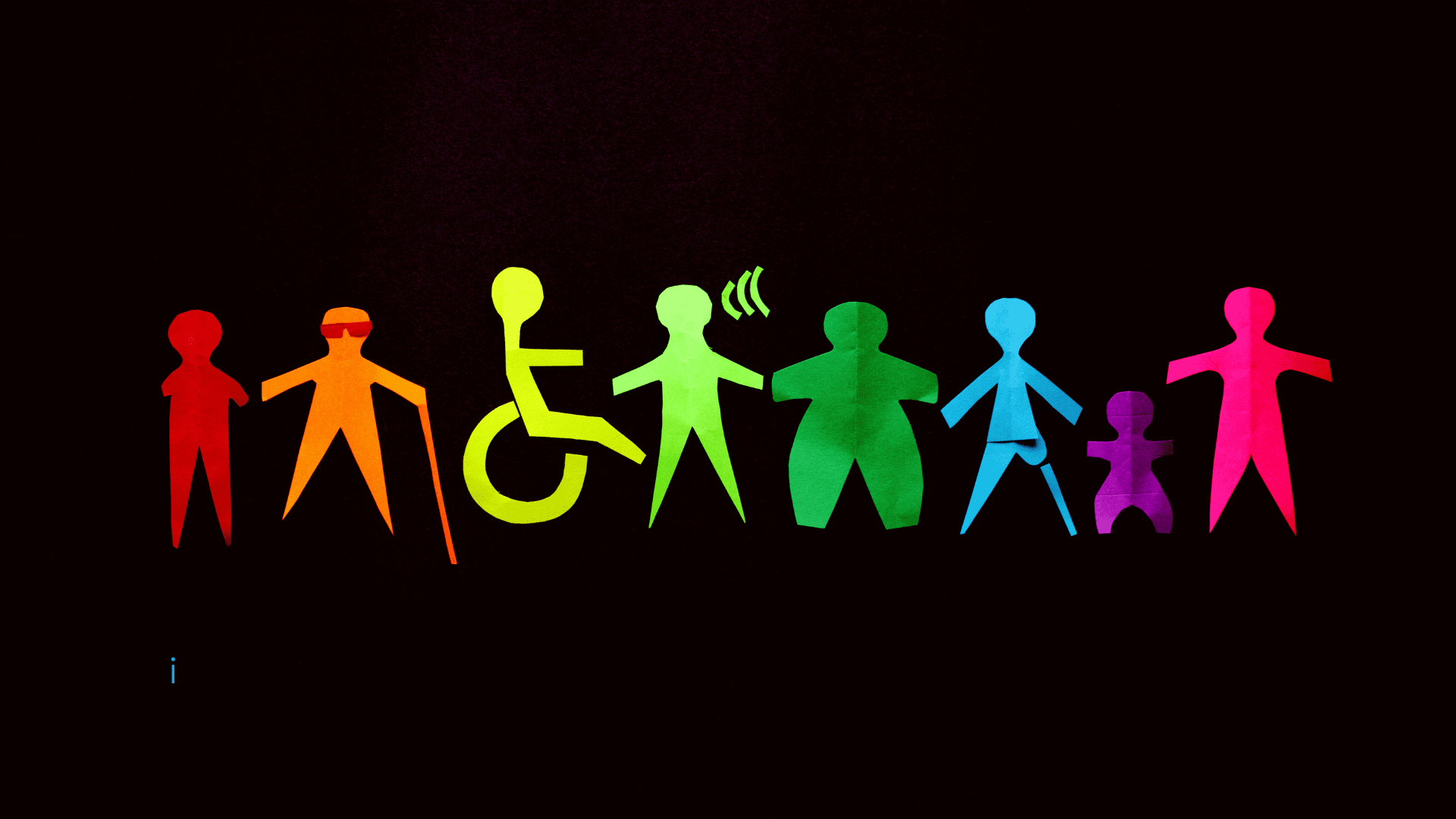
The number of people with disabilities – 1.3 billion – is about the size of the Chinese market. That number grows even larger when you include people with accessibility needs, such as older users who may need larger fonts and better color contrast on their screens.
The entire field of accessibility is about making digital products work for people with disabilities: avoiding low-contrast texts on websites and ensuring no empty links, small target sizes and the like.
CFOs tend to overlook the size and importance of this market. However, with an aging population, they will soon discover that this movement is more popular than they imagine. I should know. In 2011, I wrote a blog post on an obscure database blog suggesting a day of awareness for digital accessibility. That idea became Global Accessibility Awareness Day (GAAD).
This cause impacts so many people that the awareness day went viral from its very first year. We stopped counting when we hit 220 million unique users on the #GAAD hashtag. Apple invited Stevie Wonder to perform on campus. Amazon ran month-long internal education events. In 2024, the White House invited me to speak at their own GAAD event. None of this happened because accessibility is a niche concern. It clearly has a major impact on the population.
Now that AI has arrived, people are wondering: Is this good for our community or bad?
It can be both.
Nonprofit WebAIM has been performing a yearly accessibility evaluation on the top million homepages for seven years. In 2019, they found that 97.8% of homepages failed basic accessibility checks. Through 2025, we’ve seen only a tiny improvement to 94.8%. In 2026, the failure rate rose back up to 95.9%.
Large language models (LLMs) have gotten very good at writing code. Most developers in 2026 write very little of it themselves. AI is writing most of the code. Since LLMs are trained on the web, it is not hard to imagine that they learned very bad habits. If AI is going to write all the code, then it must learn to code accessibly, or it will lock out people with disabilities.
AI model companies compete on their performance in benchmarks. That is why we at the GAAD Foundation, partnering with ServiceNow, decided to create a benchmark for accessibility. AIMAC, the AI Model Accessibility Checker, compares the results of 39 top AI coding models.
The first iteration of this benchmark tests for conditions that should be straightforward for AI companies to train on. We query each model, asking it to generate a web page. Then, we perform automated testing with an industry-standard tool called axe-core. And we grade it.
We found that, like the web these models were trained on, poor color contrast dominates the errors. It is the same top issue that the WebAIM Million encounters year after year.
Nearly 96% of the top million home pages failed basic accessibility checks.
The good news is that two of WebAIM’s other major errors, missing document language and missing alternative text for images (used by blind people to understand images), are almost always handled correctly by AI models.
The main takeaway from our results is that OpenAI’s GPT 5.3 Codex has the best score. OpenAI also holds the next three spots with a variety of its models. It is well-known in the accessibility community that OpenAI is engaging the disability community to make sure they perform well on tasks that impact people with disabilities. The fifth spot goes to an open-weight model, Arcee AI’s Trinity Large Preview.
Anthropic’s Claude models did not perform well. Most sit in the middle of the pack. This is a head-scratcher for a company that positions itself around ethical AI. Claude Haiku 4.5 sits in 10th place while Claude Opus 4.6 (Fast) ranks 23rd and Claude Opus at 26th. Claude Sonnet 4.6 actually regressed! Sonnet 4.5 was in 19th place but now fell to 36th, near the bottom.
Until their latest model was released, the biggest disappointment had been Google DeepMind. Their flagship Gemini 3 Pro Preview was dead last. Fortunately, they seem to have noticed their poor showing on this benchmark and now 3.1 Pro Preview comes in 9th place.
We encourage AI model companies to pay attention to the accessibility of their coding models. There’s so much potential for the doors AI can open for us, but the disability community should not have to wonder whether AI will leave them behind.
Author

Get the latest insights about enterprise AI.
Subscribe to our newsletter. Thank you.