TLDR
- TorqueAGI founder Ashutosh Saxena says its physics-based AI models can learn certain tasks from as few as two to 12 examples, potentially reducing training costs and timelines.
- The startup is developing foundation models that can be adapted to robotic arms, humanoids, tractors and construction equipment without training separate models from scratch.
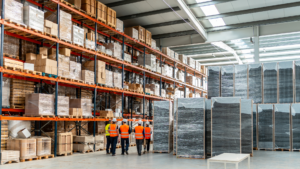
- TorqueAGI initially targets warehouses, factories, construction sites and farms, where collecting training data can be costly, slow or dangerous.
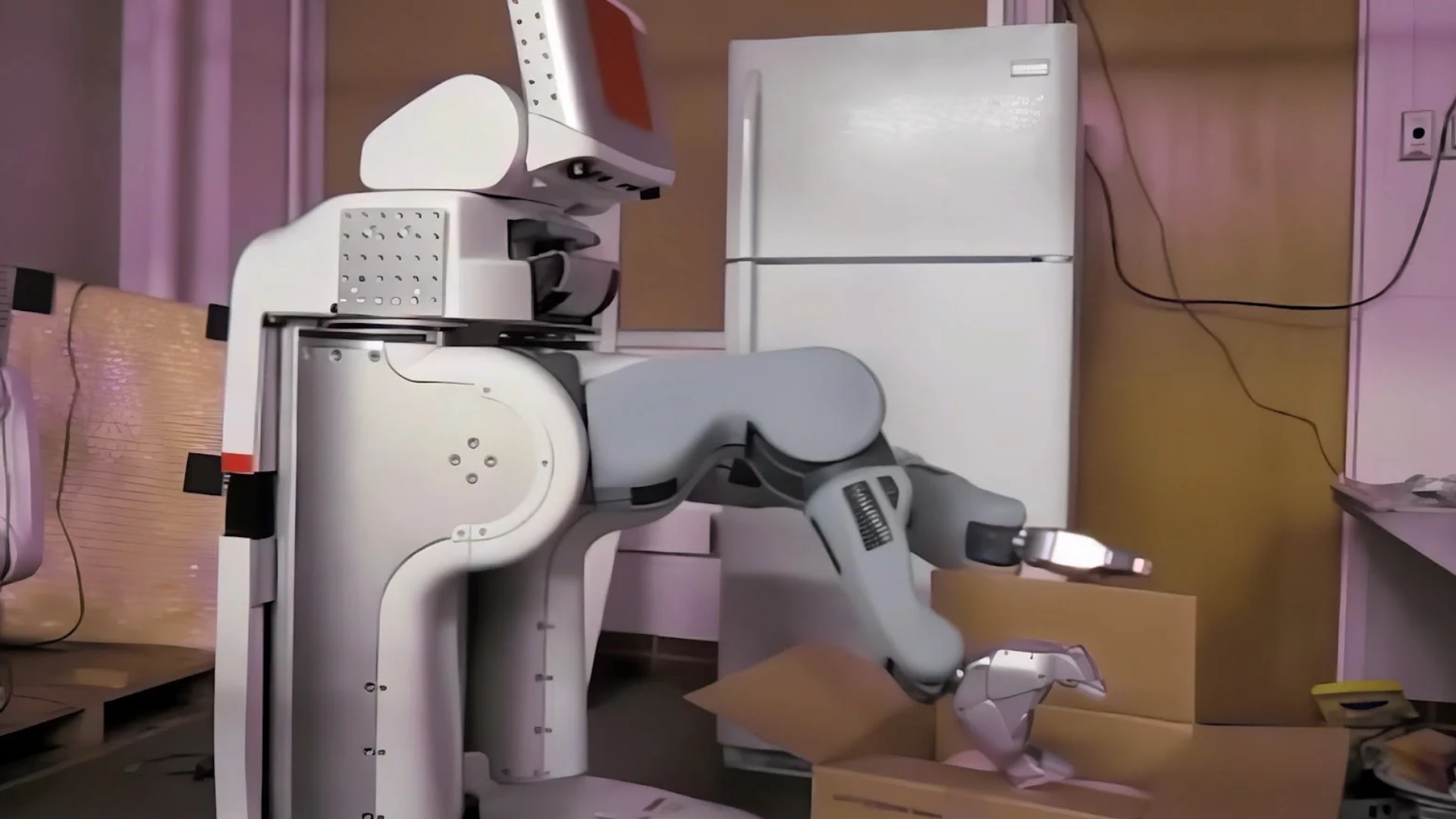
A startup founded by former Cornell University professor Ashutosh Saxena is betting that industrial robots do not need millions of training examples to learn new tasks. Instead, they need artificial intelligence that understands the physical world.
TorqueAGI is developing foundation models that incorporate physics and geometric reasoning to help robots perform unfamiliar tasks with far less training data.
The startup’s initial targets are warehouses, manufacturing plants, construction sites and farms, where collecting enough real-world data to train conventional AI systems can be expensive, time-consuming or dangerous.
In an interview with The AI Innovator, Saxena said TorqueAGI’s models can learn to do certain tasks from as few as two to 12 examples, compared with the millions of examples that some conventional approaches may require. He also claimed the technology could reduce timelines from years of data collection to deployment in weeks.
Saxena argues that the industry’s reliance on large-scale data collection and laborious imitation learning – in which an AI system learns by observing tasks and copying them – has become fundamental obstacles to deploying robots in critical industries.
“The physical AI was still treated as a copy of digital AI, which doesn’t work because you just don’t have that amount of data freely available,” said Saxena, a pioneer in applying deep learning to robotics who holds a doctorate in machine learning from Stanford and was a Microsoft Research Faculty Fellow.
His solution was to build physical constraints into the AI model itself, allowing machines to reason about what actions are possible rather than simply reproduce movements observed during training.
That means TorqueAGI doesn’t simply take an existing AI model and add physics knowledge on top of it. It changes how the model learns and reasons so that physical constraints become part of its decision-making process.
From imitation to reasoning
TorqueAGI’s approach builds on transformer models, the technology underlying many generative AI systems, but changes how the models learn about physical relationships.
Saxena said the startup incorporates physics and structural reasoning into the model’s internal architecture, including changes to the loss functions – mathematical formulas that measure by how much a model missed its goal – used during training. The objective is to teach the model relationships among objects, dimensions, movements and mechanical constraints.
Consider a 4-foot-tall robot instructed to retrieve an item from an 8-foot-tall shelf.
A conventional model trained primarily through imitating the motion might keep trying to reach the shelf even if it’s too high, Saxena said. A model capable of geometric reasoning would recognize that the shelf is too high and consider an alternative, such as using a tool.
The example illustrates the difference between reproducing a learned movement and determining whether that movement is physically feasible.
TorqueAGI’s approach still requires information about each machine, including its dimensions, sensors and mechanical configuration. But rather than training a separate AI from scratch for every robot, the startup aims to adapt a common foundation model to different types of equipment.
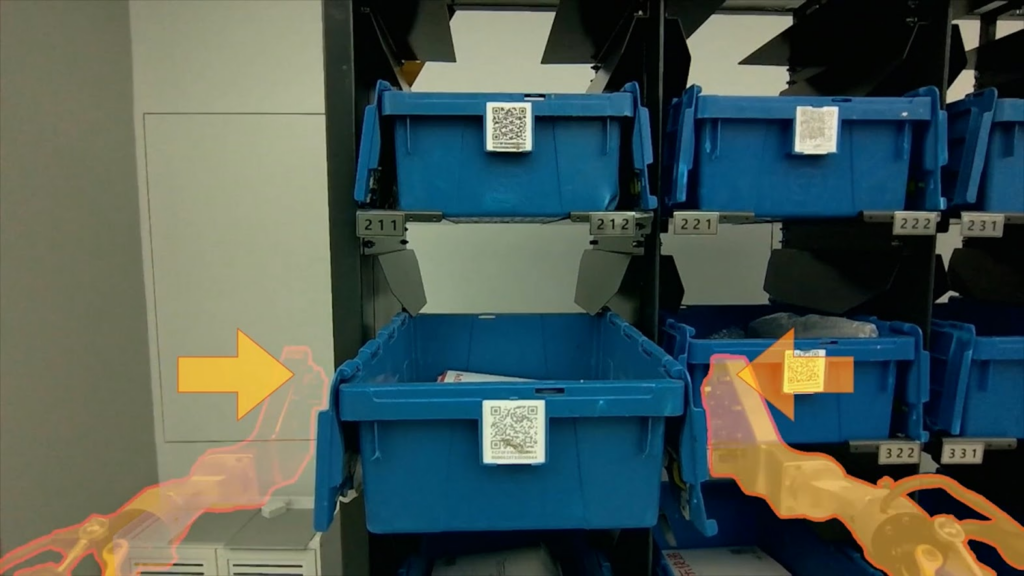
That is what Saxena calls a one-to-many approach: using a common intelligence system across robotic arms, humanoids, tractors and construction equipment instead of developing a separate AI model for every machine.
This could benefit industrial customers that operate several generations of equipment, each with different controls and physical capabilities. Training and maintaining separate AI systems for every machine and task can make automation uneconomical.
Saxena said TorqueAGI’s physics-based models have demonstrated learning efficiency improvements of as much as 1,000 times on Nvidia platforms. The startup has not disclosed the full testing methodology behind that claim.
Industrial customers put the tech to work
TorqueAGI’s first commercial focus has been warehouse logistics, where Saxena said the startup has achieved its greatest deployment traction to date.
The startup is also working in manufacturing, agricultural equipment and construction.
One collaboration is with Deere & Co., the maker of John Deere machinery. The farming equipment giant recently selected TorqueAGI as one of five startups for its 2026 Startup Collaborator Program.
Saxena said they are developing a dedicated foundation model for agricultural applications, although he declined to identify the specific tasks covered by the project because of confidentiality reasons.
The broader objective is to create AI that can operate across multiple types of agricultural machinery and tasks without requiring a separate training process for each application.
Another client is JLG Industries, a subsidiary of specialty vehicles and equipment maker Oshkosh Corp.
Saxena said TorqueAGI developed a robotics application for painting commercial buildings using the client’s equipment, which could be used in hazardous situations such as 40 feet up.
The startup also offers specialized versions of its underlying model for different operating environments. Saxena said roughly 80% of the technology is shared, with the remaining engineering tailored to each industry’s requirements.
Warehouse applications emphasize speed and throughput. Manufacturing inspection demands greater precision, including the ability to identify bent wires or missing components. Outdoor equipment must operate in less predictable environments involving soil, mud, agricultural materials and changing terrain.
Competitive landscape
TorqueAGI is entering a market where major technology companies and well-funded startups are pursuing the same broad objective: AI systems that can perform multiple physical tasks across different machines.
Its distinction is not that competitors lack physical reasoning or cross-robot learning capabilities. Several already offer those features. Rather, Saxena said TorqueAGI emphasizes physics-informed reasoning, data efficiency and customer-specific deployment in industrial environments.
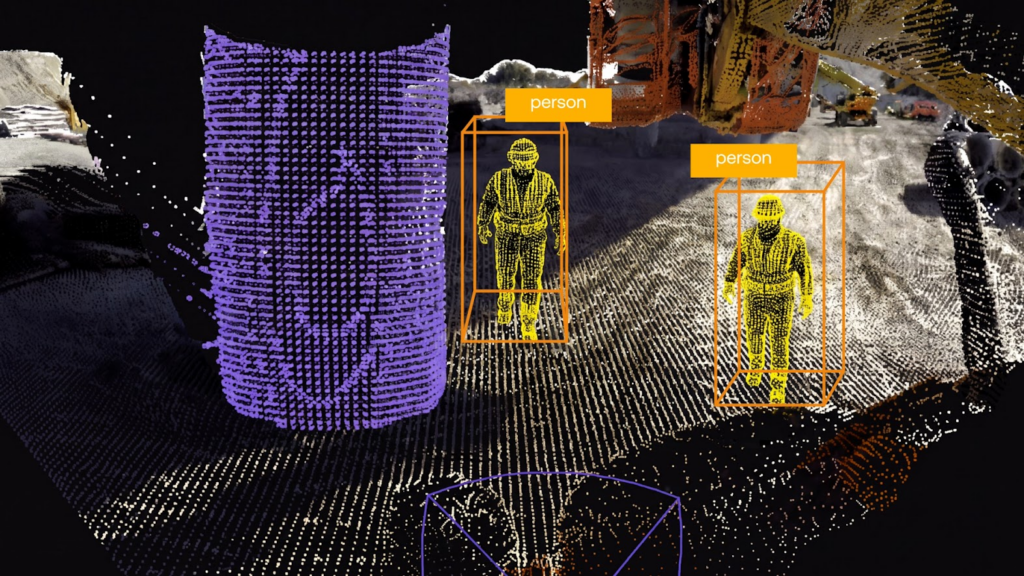
The startup also takes a different view of simulation, which has become central to the robotics strategies of Nvidia and other developers.
Saxena said simulation is valuable for engineering and testing, but contributes relatively little additional training benefit to TorqueAGI’s models because they already incorporate physical constraints.
“It’s good to have a little bit of augmentation,” he said. “But we don’t get a huge bump from simulation in the training phase.”
Sovereign physical AI
Another part of TorqueAGI’s strategy is what Saxena calls sovereign physical AI – dedicated models that industrial customers can operate within their own computing environments.
TorqueAGI keeps each customer’s AI system separate and gives their robots smaller versions of the AI model that can run directly on the machines, without constantly connecting to the cloud.
For industries involving critical infrastructure, heavy machinery or sensitive production processes, control over data and model deployment can be an important purchasing consideration.
Saxena said the industrial world already has much of the hardware required for automation. What is missing is adaptable intelligence that can operate that equipment without years of expensive data collection.
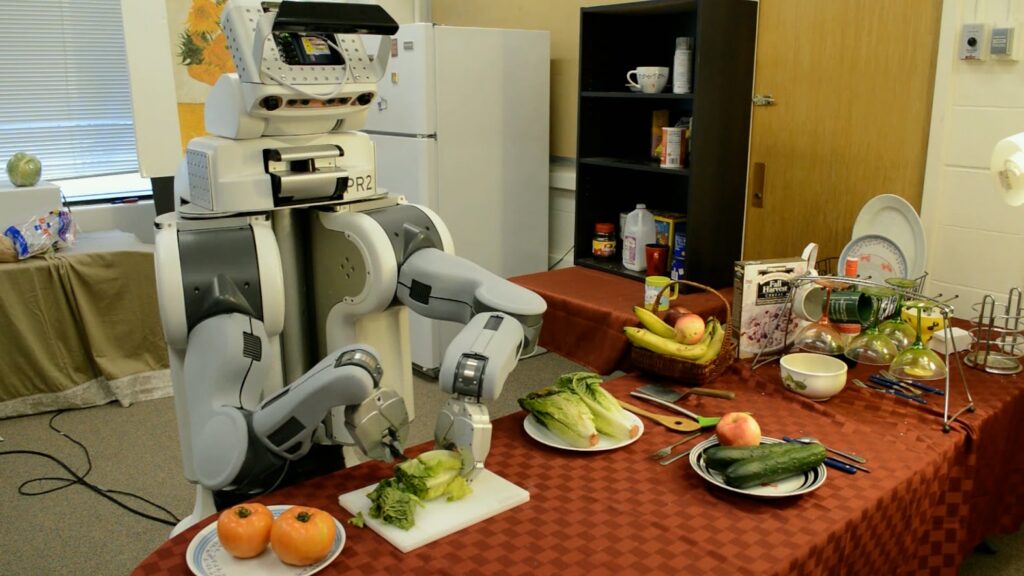
His startup aims to fill that gap, fueled by years of research in that field.
Saxena’s work in robotics stretches back two decades. While pursuing his doctorate at Stanford and later teaching at Cornell, he researched how robots could use deep learning to recognize objects, manipulate them and transfer knowledge between different machines.
In 2013, he co-authored “Deep Learning for Detecting Robotic Grasps,” which received the 2023 Test of Time Award from the Robotics: Science and Systems conference for its lasting influence on robotic manipulation.
That research provides the backdrop for TorqueAGI’s current ambition: building a common intelligence system that can operate across robotic arms, humanoids and heavy machinery.
Founded in 2025, TorqueAGI has about 20 employees and plans to roughly double its workforce in the next five to six months. Saxena declined to disclose its funding but said the startup has three years of financial runway.
Whether TorqueAGI can deliver on its promise will depend on how reliably its models perform across different machines and industrial environments – and whether the claimed savings in training data translate into lower deployment costs for customers.
Author

Get the latest insights about enterprise AI.
Subscribe to our newsletter. Thank you.










Be First to Comment