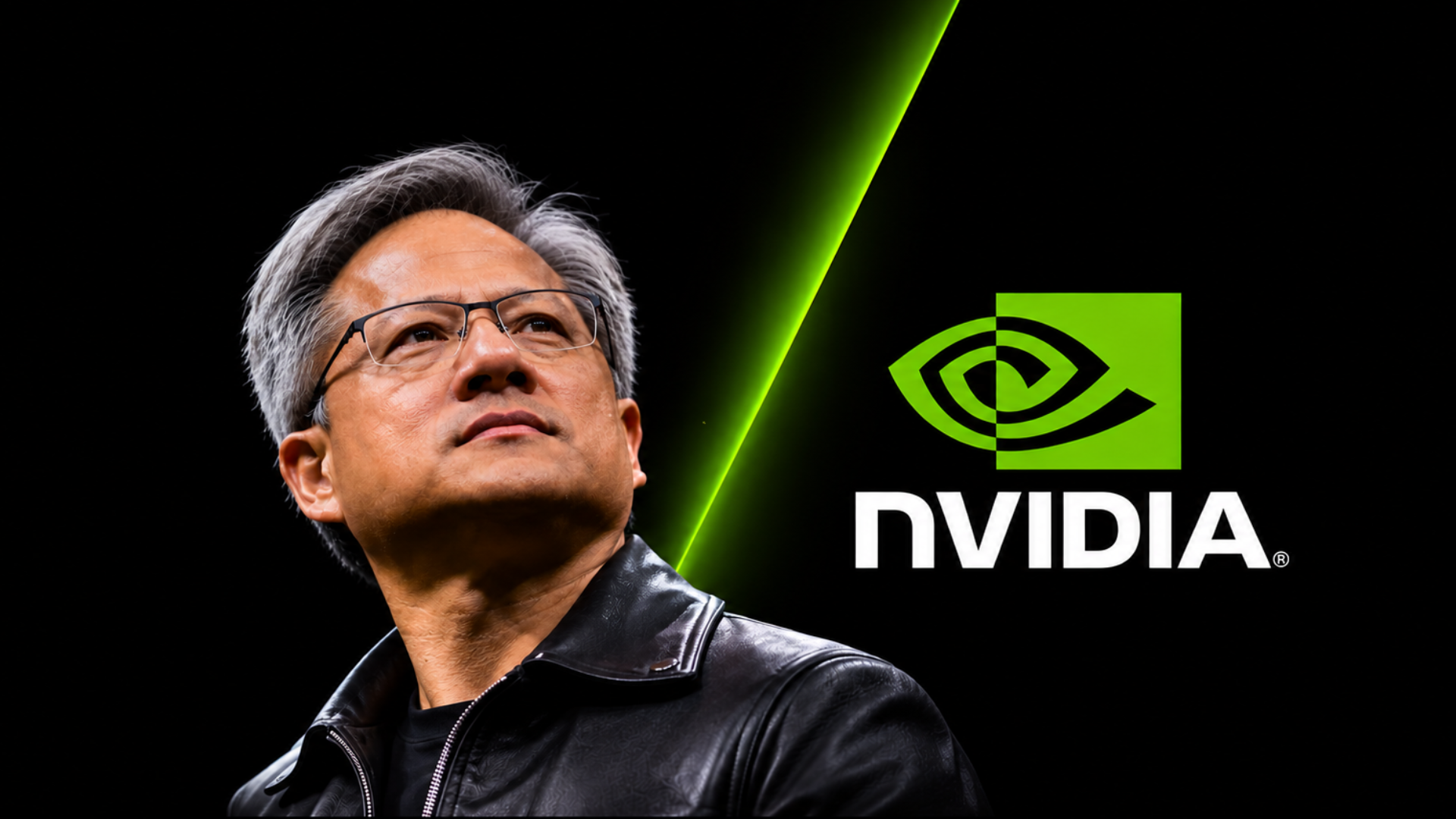
Nvidia announced today that its CEO Jensen Huang has resigned, rattling investors and raising questions about the future of the world’s dominant AI chipmaker.
But the departure of one of the AI industry’s most influential executives may prove more damaging to Nvidia than to the broader AI business, where competition is intensifying and major technology companies are developing alternatives to its processors.
Huang, who co-founded Nvidia in 1993, has resigned as CEO and board member following reports of extramarital relationships: a Chinese businesswoman suspected by U.S. intelligence officials of being a spy for Beijing, and an Nvidia executive who reported directly to him. Nvidia named CFO Colette Kress interim CEO while its board searches for a permanent replacement.
Nvidia shares plunged more than 5.5% in midday trading, erasing about $200 billion in market value, while competitors AMD and Broadcom gained.
The market reaction reflects Huang’s central role in Nvidia’s rise as the dominant supplier of processors used to train and run advanced AI models, with a market share of more than 80%. He also cultivated relationships with cloud providers, semiconductor suppliers and AI developers, helping establish a network of commercial agreements and investments that supported the AI boom.
But the industry Huang helped build has grown far beyond Nvidia.
Microsoft, Google, Amazon and Meta are investing billions of dollars in their own AI computing infrastructure, including AI chips designed to reduce their reliance on Nvidia as rival chipmakers are competing for a share of the expanding market.
Nvidia’s biggest customers as rivals
Perhaps the most consequential change in the AI industry is that Nvidia’s largest customers are increasingly building alternatives to its products.
Google has spent more than a decade developing Tensor Processing Units, or TPUs, specialized processors designed for machine learning. Its seventh-generation Ironwood TPU is optimized for large-scale AI workloads, particularly inference, the process of running trained models.
Google uses TPUs to support its own AI services and makes TPU computing capacity available to customers through Google Cloud. Its advantage extends beyond chip design: Google also develops AI models through DeepMind, giving it direct control over how software and hardware work together.
AWS has taken a similar approach with Trainium, its family of custom AI processors. Trainium3 is designed to improve the economics of training and running AI models at scale. AWS can offer customers Nvidia GPUs alongside its own processors, allowing it to compete on price, performance and availability.
Microsoft is developing its Maia AI accelerator family to support workloads across its Azure cloud infrastructure. The company’s investment in custom silicon gives it another way to manage computing costs and reduce exposure to shortages or pricing changes in the GPU market.
Meta, meanwhile, is expanding its Meta Training and Inference Accelerator, or MTIA, program. The company is designing chips for its enormous internal AI workloads, including recommendation systems and generative AI applications.
Meta’s approach reflects a broader trend among large technology companies: rather than relying exclusively on general-purpose GPUs, they are developing specialized processors for workloads they can predict and optimize.
These initiatives do not mean Nvidia is about to lose its largest customers. Google, Amazon, Microsoft and Meta continue to use Nvidia technology for workloads where its performance, flexibility and software ecosystem remain advantageous.
But they increasingly have alternatives, particularly as AI inference becomes a larger component of computing demand.
AMD, Broadcom mount challenge
Competition is also increasing among semiconductor suppliers.
AMD is expanding its Instinct accelerator business, offering GPUs designed to compete directly with Nvidia’s products in data centers. The company is also investing in its ROCm software ecosystem to make it easier for developers to run AI workloads outside Nvidia’s CUDA platform.
Broadcom is pursuing a different strategy, working with large technology companies to develop custom AI processors, often called application-specific integrated circuits, or ASICs.
Unlike general-purpose GPUs, these chips can be optimized for particular workloads, potentially improving performance per dollar and reducing power consumption.
Broadcom’s business illustrates why the threat to Nvidia extends beyond conventional chip competition. Some of Nvidia’s largest customers are not merely purchasing alternatives; they are helping design them.
That creates an industry in which Nvidia must compete against both independent semiconductor manufacturers and the internal engineering operations of its biggest buyers.
Still, Nvidia retains substantial advantages. Its CUDA software platform, networking technology and integrated computing systems create an ecosystem that competitors have struggled to match.
Its processors are also deeply embedded in AI development, and switching hardware can require costly changes to software and infrastructure.
Those advantages are unlikely to disappear with Huang’s resignation.
“The chips Nvidia will ship over the next year or two are already designed and in production, and its customers’ 2027 spending plans don’t depend on who runs the company,” Armina Rosenberg, portfolio manager and co-founder of Minotaur Capital, told Reuters.
The greater risk is that Nvidia loses some of its long-term strategic advantage while competitors gain ground.
Why would China spy on Nvidia while blocking its chips?
The controversy surrounding Huang also exposes a contradiction in China’s approach to American AI technology.
Beijing has been encouraging Chinese technology companies to reduce their dependence on Nvidia and adopt domestically developed processors from companies such as Huawei and Cambricon.
Chinese authorities have restricted imports of certain advanced Nvidia chips, even as the country’s largest technology companies continue seeking access to American computing technology, according to Reuters.
That creates conflicting incentives.
Beijing wants semiconductor self-reliance, while Alibaba, ByteDance and other Chinese technology companies want the computing capacity needed to compete in advanced AI.
The distinction complicates one interpretation of the allegations involving Alice Huang, a businesswoman associated with Singapore-based cloud computing company Megaspeed.
U.S. intelligence officials reportedly suspect she has ties to Chinese intelligence. Megaspeed has also faced scrutiny over allegations that its overseas data centers provided Chinese customers with access to advanced Nvidia computing systems despite U.S. export restrictions.
The company has denied illegally diverting chips to China.
A Financial Times report said China’s Ministry of State Security had sought information about Alice Huang from people familiar with her, including details about her business and connections.
That could suggest Chinese authorities were investigating her rather than directing her activities.
The spy allegations remain unproven publicly. Nvidia has said it has no reason to believe company secrets or national security were compromised, although its board launched an independent investigation.
Nvidia’s financial relationships pose a broader risk
The more immediate threat to the wider AI industry may come from Nvidia’s role as a financier rather than the loss of Huang’s technical leadership.
Under Huang, Nvidia expanded investments and commercial agreements with companies developing AI infrastructure, including businesses that purchase its processors and rent computing capacity to customers.
These arrangements helped support demand for Nvidia products while providing capital to companies expanding data center capacity.
A successor could adopt a more cautious approach to investments, financing guarantees and strategic partnerships, potentially affecting businesses that depend on Nvidia’s support.
CoreWeave, a major Nvidia customer that rents computing capacity to AI developers, is among the companies exposed to changes in the chipmaker’s commercial strategy.
Neil Shah, vice president of research at Counterpoint Research, told Reuters that Nvidia could slow its aggressive ecosystem investments and infrastructure agreements without Huang.
Such changes could increase financing costs or delay some projects. But they would not necessarily undermine the underlying demand for AI computing.
Google, Amazon, Microsoft and Meta have their own financial resources, chip development programs and incentives to continue expanding AI infrastructure.
A leadership crisis for Nvidia, not necessarily for AI
Nvidia must now demonstrate that it can preserve its technological advantages and commercial relationships without the executive who shaped its strategy for 33 years.
Its board also faces questions about succession planning, corporate governance and the unresolved allegations surrounding Huang.
The company has not announced changes to its product roadmap or financial commitments.
Nvidia’s hardware and software remain central to much of the industry’s computing infrastructure. Huang helped create the computing infrastructure that made the AI boom possible. His departure could fundamentally change Nvidia’s strategy and competitive position.
Nvidia’s board also faces a historical cautionary tale: Apple’s 1985 power struggle, when CEO John Sculley, backed by the board, stripped co-founder Steve Jobs of his operational responsibilities. Jobs later resigned and founded NeXT.
After Apple foundered, Jobs returned in 1997, eventually leading the company’s resurgence.
Epic Games CEO Tim Sweeney said on X that “this would be an Apple firing Steve Jobs level of idiocy from Nvidia’s board if they did that, and a grievous harm to the United States of America.”
Marc Goldstein, U.S. research head at proxy advisory firm Institutional Shareholder Services, told Reuters that influential founders often get more leeway from investors and boards. “If you have a figure like Steve Jobs, I think people on Wall Street as well as in Silicon Valley would say they’re entitled to some leeway or deference.”
History shows investors a lesson about the risks of losing a company founder whose technological vision and leadership changed the AI industry and ushered in a new computing age. Nvidia’s board must now demonstrate that the company can sustain Huang’s strategy without him.
Author

Get the latest insights about enterprise AI.
Subscribe to our newsletter. Thank you.







Be First to Comment