TLDR
- Nebraska is harnessing AI in agriculture, where robots, autonomous vehicles and machine vision systems help farmers manage crops, livestock and food production more efficiently, according to Brennan Costello, director of state startup incubator The Combine.
- Labor shortages and rising costs are driving adoption of agtech, with technologies such as precision spraying reducing chemical use by up to 50% while helping farmers address workforce challenges.
- The future of farming is increasingly data-driven, with AI helping farmers make plant-by-plant decisions, improve sustainability and boost productivity through automation and precision agriculture.
In the heartland of America, AI is being used not just to write essays or generate images. It is used to spot weeds in cornfields, steer autonomous feed trucks through cattle lots, monitor grain bins for spoilage and eventually help farmers decide − plant by plant − how to grow food more efficiently.
That shift is playing out in places like The Combine, a Nebraska-based agriculture technology incubator that is betting the next major wave of AI innovation will emerge not from Silicon Valley consumer apps, but from farms, feedlots and meatpacking plants in America’s heartland.
“We are at the early stages of AI tool development and AI adoption in farming,” Brennan Costello, director of The Combine, said in an interview with The AI Innovator. “Much of the value that we see in unlocking AI is in what we call physical AI. Farming can’t just live on a computer. It’s dependent on physical plants, physical animals, physical elements.”
Founded in 2019, The Combine was created to help build agriculture technology companies in Nebraska and connect startups to the state’s sprawling agricultural economy. Nebraska sits at the center of several major agricultural industries. About 80% of its acres are irrigated, making it a global hub for irrigation and water technology, while the state consistently ranks near the top nationally in cattle feeding and cattle processing.
“Ag is pretty paramount to Nebraska’s economy,” he said.
Costello said the incubator emerged partly out of frustration that too much agtech innovation was coming from the West and East coasts rather than from regions that actually understood farming problems firsthand.
“The Combine got started essentially because we felt like we were falling behind in developing agriculture technology here at home,” he said. “We were seeing a lot of technology come out of the coasts.”
The Combine operates as a no-fee, no-equity incubator under Invest Nebraska, a state venture capital fund focused on economic development. The incubator works with roughly 40 early-stage startups, helping them develop prototypes with feedback from farmers, connect with agriculture groups such as the Nebraska Corn Board, and raise funding. Inside Nebraska investments have ranged from $100,000 to $1 million.
“One thing that’s really important to us is that we’re building startups that are going to do really practical problem-solving in agriculture and approach problems with a producer-centric focus,” Costello said.
Robots in grain bins and feedlots
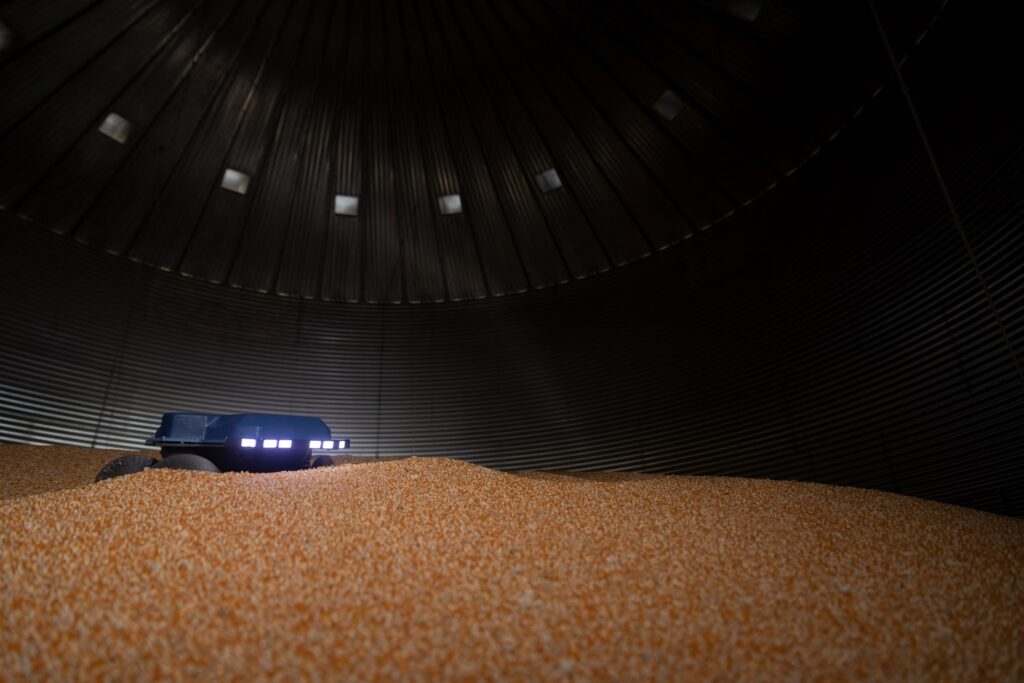
Among the startups working with The Combine is Grain Weevil, which developed a robotic system that moves through grain bins to prevent spoilage and crust formation. Grain storage may sound mundane, but spoiled grain can cost farmers significant amounts of money and even create dangerous working conditions.
Costello said building robots for grain bins is unusually difficult because the machines must operate in dusty, humid, enclosed steel environments where radio signals are weak and equipment must be explosion-proof.
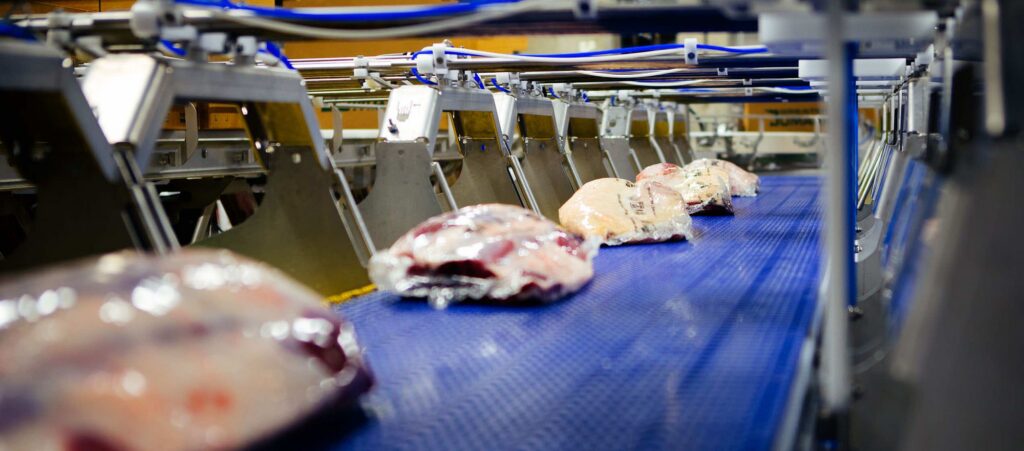
Another company, Marble Technologies, is building robotic systems for meatpacking plants, one of the most labor-intensive parts of the food supply chain. The company’s first product automates packaging tasks in processing facilities and can sort meat more precisely by weight and size.
The startup eventually plans to develop robots capable of operating directly on meat-cutting floors, a technically difficult environment involving sharp tools, heavy equipment and organic materials.
AGEO is developing autonomous feed trucks capable of navigating large feedlots independently and operating 24 hours a day. The vehicles must maneuver through constantly changing outdoor environments rather than following fixed warehouse routes.
Other startups it supports include Birds Eye Robotics, which is developing autonomous robots to monitor poultry barns, and Landoption, which uses AI to help farmers identify conservation, carbon and land-use programs that could generate additional revenue streams.
Agtech startups are getting interest from farmers due in no small part to the labor shortage.
Globally, farms are grappling with aging workforces and shrinking labor pools. The Combine pointed to USDA data showing that 38% of U.S. farmers are now 65 or older. As U.S. farm employment has declined in recent years, demand for agricultural output continues rising as populations increase.
Precision and regenerative farming
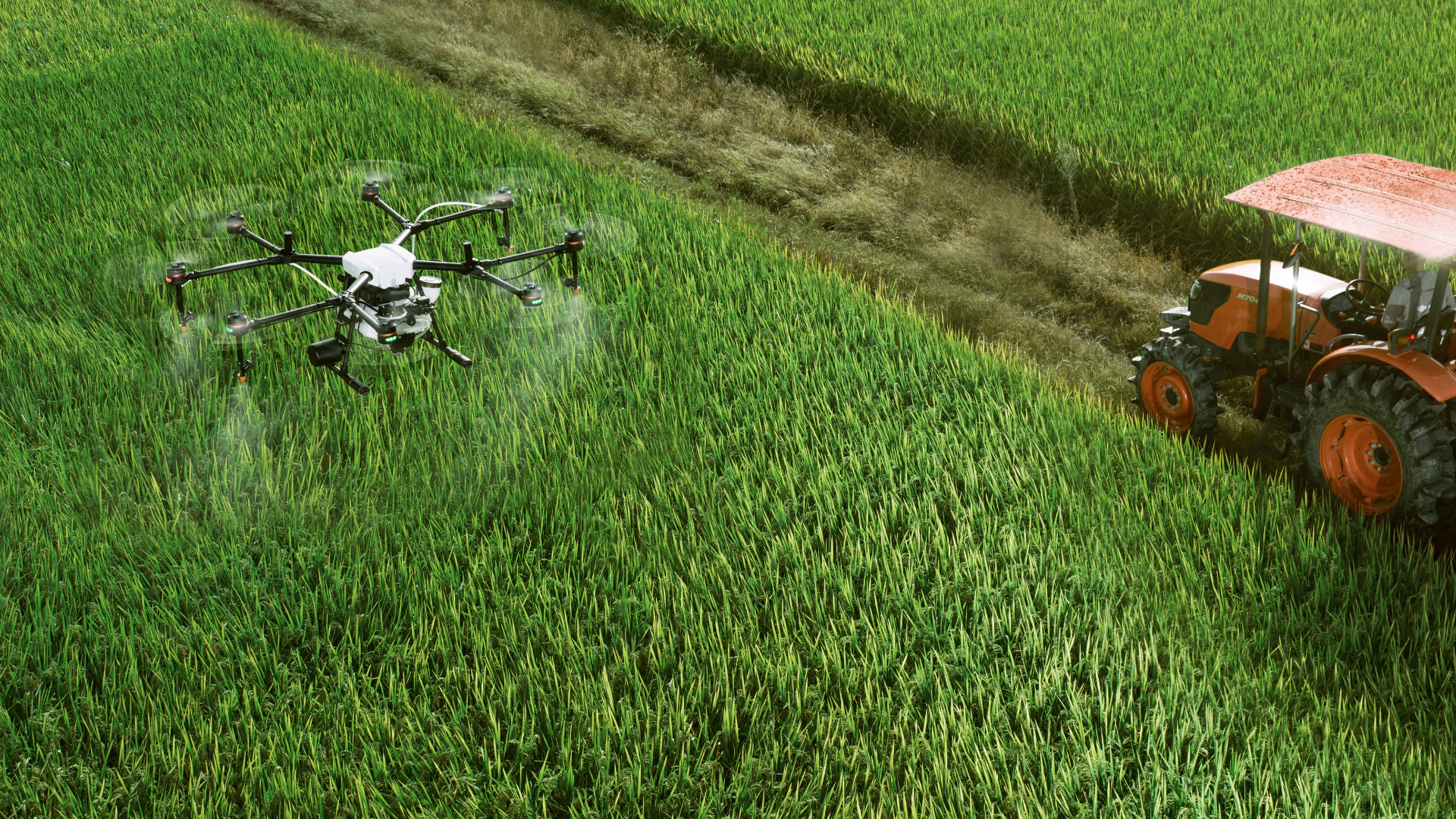
One of the fastest-growing technologies on farms today is precision spraying systems that use machine vision and machine learning to selectively spray weeds instead of blanket-spraying entire fields with chemicals.
Costello said some farms are reducing chemical usage by as much as 50% using “see-and-spray” systems developed by companies including John Deere and startups such as Greeneye Technology.
“That’s being adopted at speed − very, very quickly,” he said. “It’s not reducing inputs by 10%. It’s reducing inputs by 50%.”
The technology reflects a broader trend in agriculture toward precision farming, where fields are increasingly managed at the level of individual plants rather than broad acreage.
“We’ve gone from managing farms from a field aspect to now where we can manage each individual plant separately,” Costello said. “AI and automation are allowing farmers to do that.”
Farmers, Costello said, are already sitting on enormous amounts of operational data from sensors, irrigation systems, satellite imagery, weather systems and yield tracking tools. The next challenge is turning that flood of data into real-time decisions.
“What farmers are really looking for now is help to make a good decision,” he said.
Still, adoption remains uneven.
Farm economics are under pressure because crop prices remain weak while input costs remain high. That makes farmers cautious about investing in expensive new systems. Costello also noted that most farms are still family-run operations without dedicated technology staff.
“If there’s something that requires a heavy lift for a farmer to learn how to use, it’s very difficult for that technology to be adopted,” he said.
The future farm
Even so, Costello believes AI could fundamentally reshape agriculture over the next decade. He envisions fleets of autonomous drones and smaller robotic machines operating continuously across farms while human farmers supervise broader operations.
“One way to think about it is independent AI systems that are managing different parts of the farm, operating at the same time with a farmer overseeing these different practices,” he said.
The vision extends beyond automation. Costello argues AI could enable farms to use data and precision systems to reduce fertilizer use, improve soil health and produce more food with fewer resources. These systems could let land continue to produce food for centuries to come.
“Tech-enabled regenerative agriculture is our future,” Costello said. “It’s the idea of what practices and technology are implemented so you can farm this land for hundreds of years.”
He also sees opportunities to create entirely new industrial products from agricultural crops, including replacing petroleum-based plastics with crop-derived materials.
“How can we use organic material to make diapers on a mass scale?” he said. “That’s really regenerative.”
For now, the AI revolution in America’s farm belt remains more practical than futuristic. Farmers are less interested in hype than in technologies that save money, reduce labor pressures and make day-to-day operations easier.
“Farmers, as a general rule, are very interested in technology if it solves really big practical problems,” Costello said.
Author

Get the latest insights about enterprise AI.
Subscribe to our newsletter. Thank you.