Space Exploration Technologies Corp., or SpaceX, has filed to go public at a reported valuation of up to $2 trillion, making it the largest-ever IPO in history.
The company founded by Elon Musk in 2002 comprises a rocket division; a satellite broadband service (Starlink); an AI startup (xAI); and a social media platform (X). It is building its own chips and also planning to launch data centers in space.
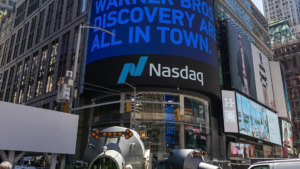
SpaceX will list its Class A shares on the Nasdaq under the ticker symbol, SPCX.
Here are the highlights from its S-1 filing with the U.S. Securities and Exchange Commission.
Meet Sherlock AI
Need more clues? Ask the Sherlock chatbot to summarize this story, explain technical concepts or answer other questions.
- Literally out-of-this-world mission
“You want to wake up in the morning and think the future is going to be great—and that’s what being a space-faring civilization is all about. It’s about believing in the future and thinking that the future will be better than the past. And I can’t think of anything more exciting than going out there and being among the stars.” — Elon Musk
“Our mission is to build the systems and technologies necessary to make life multiplanetary, to understand the true nature of the universe, and to extend the light of consciousness to the stars.” - Space pioneer
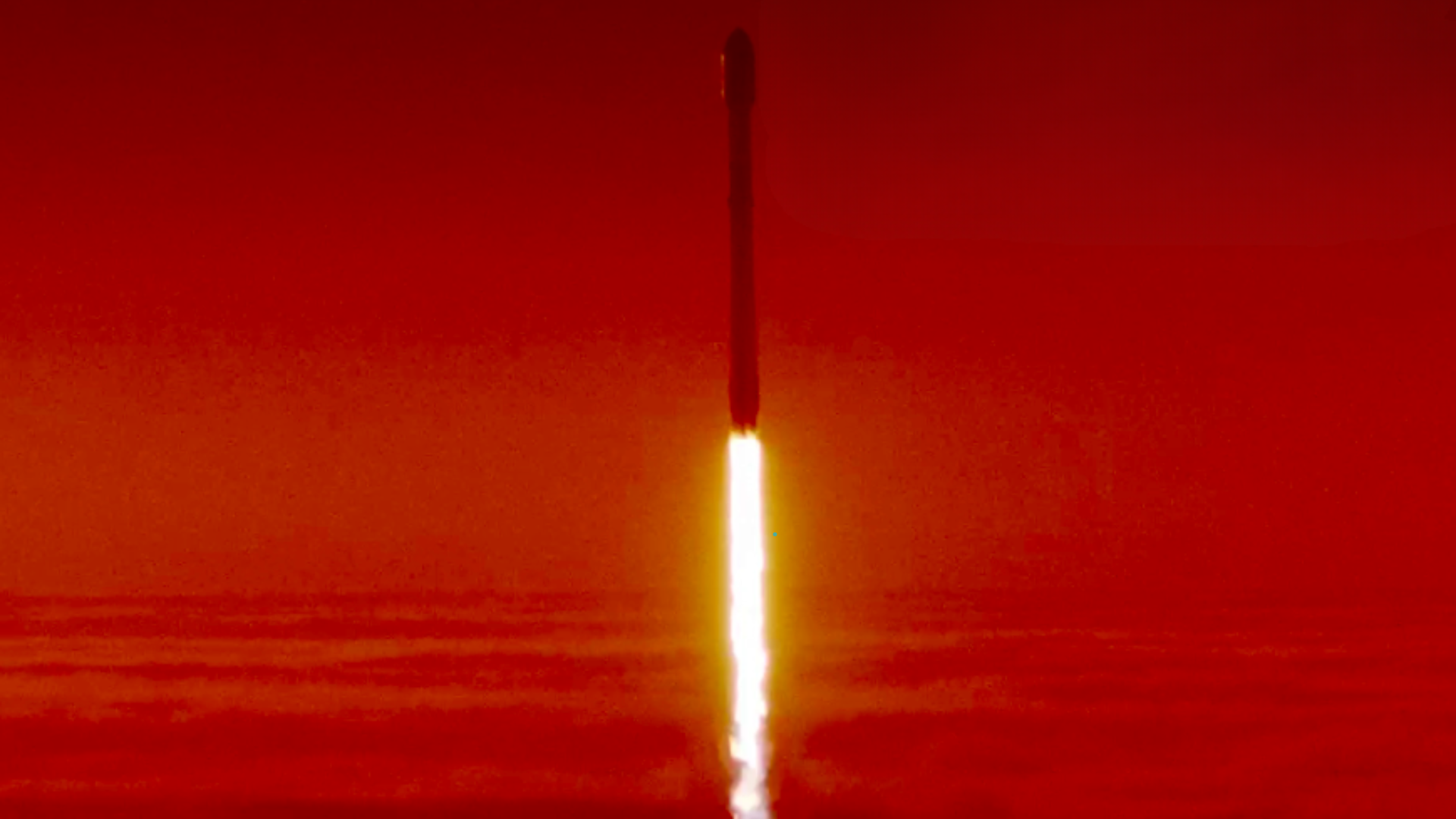
– First private company to build a liquid-fuel rocket to reach orbit, dock with the International Space Station, propulsively land an orbital-class booster and reuse it.
– 650 total launches since 2008, 85% of missions using reused boosters, 78 astronauts flown
– Operates a global telecoms network powered by 9,600 Starlink broadband and mobile satellites, connecting millions of users in 164 countries, territories, and other markets, as of Mar. 31.
– Aiming to be vertically integrated to lower compute costs: acquired Musk’s AI startup xAI, the maker of the Grok AI chatbot (software) and building data centers on Earth and in space (hardware). - Operating losses as costs soar
– 2025 consolidated revenue of $18.67 billion with loss from operations of $2.6 billion and adjusted EBITDA (earnings before interest, taxes, depreciation and amortization) of $6.6 billion. This compares with $14 billion in revenue for 2024 and operating income of $466 million.
– Quarter ended Mar. 31 saw revenue of $4.7 billion, operating loss of $1.9 billion and adjusted EBITDA of $1.13 billion. In the same quarter a year earlier, revenue was $4.07 billion and operating profit was $27 million.
– AI is the gas-guzzler. Capital spending on AI was $20.7 billion in 2025 compared with $3.8 billion for space and $4.2 billion for connectivity. In the quarter ended Mar. 31, AI capex was $7.7 billion, triple the $2.57 billion spent a year prior. - Starlink is buoying company profitability.
– In 2025, the connectivity division mainly consisting of Starlink posted operating income of $4.4 billion on revenue of $11.4 billion. They were up 120.4% and 49.8% year-over-year, respectively. Adjusted EBITDA was $7.17 billion, up 86.2% from the prior year.
– The space segment lost $657 million from operations on revenue of $4.1 billion, with adjusted EBITDA of $653 million. SpaceX noted that it invested $3 billion in R&D last year.
– There were 10.3 million subscribers as of Mar. 31, up from 5 million in the same quarter a year ago. Prices went down, with ARPU (average revenue per user) at $66 a month compared to $86 last year. - Plans to establish a “lunar economy”
SpaceX hopes to set up operations on the moon, including cargo transport, manufacturing and energy production. - Future markets include asteroid mining
-Point-to-point terrestrial travel
-Space tourism
– In-orbit manufacturing
– Passenger and cargo transport to the moon and Mars
– Energy production on the moon and Mars
– Manufacturing capabilities on the moon and Mars
– Asteroid mining - Largest-ever total addressable market (TAM)
– SpaceX is estimating that its TAM is $28.5 trillion (with a T) – even without China and Russia.
– The company breaks its estimate down as follows: $370 billion for space; $1.6 trillion for connectivity (Starlink broadband and mobile); $26.5 trillion in AI comprising mostly of $22.7 trillion in enterprise applications. - Uses an operational style called “The Algorithm”
The five-step iterative process guides its day-to-day operations. The steps are as follows:
– Make the requirements less dumb.
– Delete unnecessary processes or parts.
– Optimize necessary processes or parts.
– Accelerate cycle time.
– Automate only proven processes. - Elon Musk will have voting control.
– As the founder, CEO, chief technical officer and chairman of the board, Musk will hold the majority of SpaceX’s Class B voting shares. This will give him the ability to elect, remove or fill Class B board seats. (His exact percentage ownership has been left blank to be filled out later.)
– As a controlled company, SpaceX is not required to have a majority of its board composed of independent directors or to establish independent compensation and nominating committees.
– Musk will also hold an as yet undisclosed number of Class A common shares.
– Owners of Class A shares will get one vote per share. Class B shareholders get 10 votes per share.
“As a result, Mr. Musk will have the power to control the outcome of matters requiring shareholder approval, including election of all our directors, and to control our business and affairs,” according to the filing. - Musk to get a billion shares if he gets people to move to Mars, among other goals.
– As an incentive for performance, Musk will get a billion restricted Class B shares if he accomplishes several goals including establishing a colony on Mars with at least a million residents. Other goals include SpaceX hitting a $7.5 trillion market capitalization.
Author

Get the latest insights about enterprise AI.
Subscribe to our newsletter. Thank you.