PARIS — For years, the billionaire space race has largely been defined by contrasting personalities: Elon Musk, the mercurial engineer pushing humanity toward Mars as quickly as possible, and Jeff Bezos, the methodical Amazon founder building what he believes will become the infrastructure for an entirely new economy beyond Earth.
Now Bezos is making the case that Blue Origin’s step-by-step strategy may ultimately prove the more enduring one.
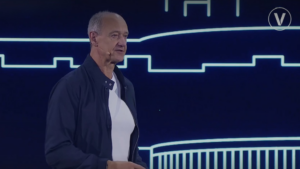
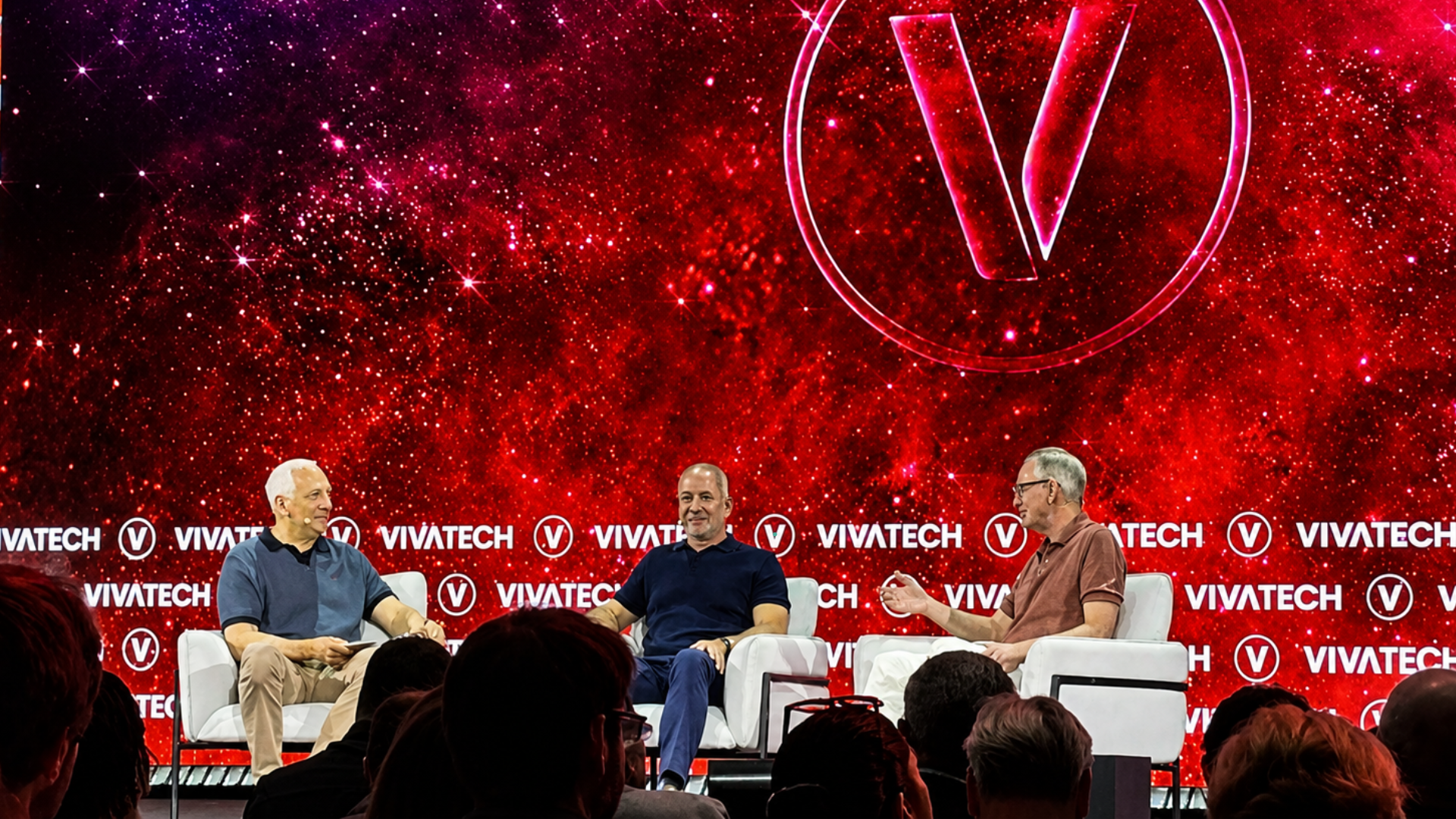
At the VivaTech conference in Paris, which sponsored this journalist’s trip, Bezos laid out a vision that differs sharply from SpaceX’s Mars-centric approach. Rather than rushing to the Red Planet, Blue Origin is focused on establishing a permanent presence on the moon first, using it as a staging ground for deeper exploration of the solar system and eventually Mars.
“We’ve been fixated on not skipping any steps,” Bezos said. “We should go to the moon first. We’ll go to Mars, and we’ll do all the other things, but the moon is the first best step.”
The comments highlight one of the biggest philosophical differences emerging in the commercial space industry.
Musk has repeatedly argued that humanity should become a multi-planetary species as quickly as possible, with Mars serving as a backup civilization. Blue Origin, by contrast, sees the moon as a critical proving ground. Bezos argues that the moon’s proximity to Earth, lower gravity and potential reserves of water ice make it a logical first step toward a larger space economy.
The moon can be reached in roughly three and a half days, compared with journeys to Mars that require precise planetary alignments every two years. Water ice trapped in permanently shadowed lunar craters could eventually be converted into liquid hydrogen and oxygen rocket fuel, allowing spacecraft to refuel without launching everything from Earth.
“When you skip steps, it actually doesn’t make you faster,” Bezos said.
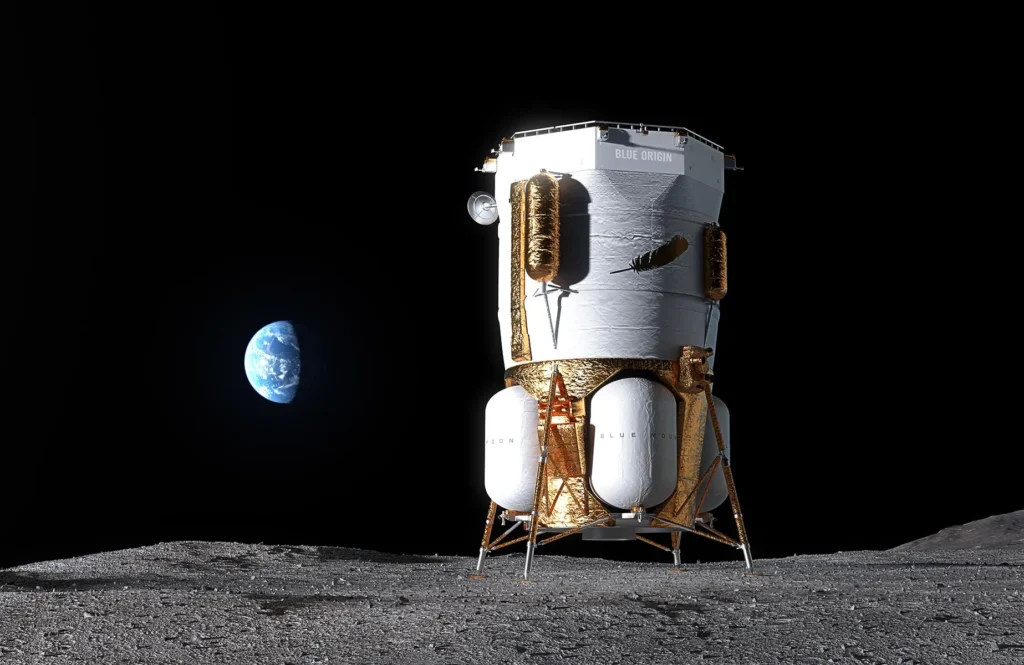
Blue Origin’s lunar ambitions center on its Blue Moon lander program and what executives call “lunar permanence” — creating a sustained human presence rather than short visits. The company plans to launch its Mark 1 lunar lander and later deploy the larger human-rated Mark 2 version that will support NASA’s Artemis missions.
A space economy
The strategy fits Bezos’ broader belief that space’s ultimate purpose isn’t just for exploration. It is economic expansion that could eventually lift society overall.
“Today, the cost of admission to space is still very high. If you look back at what I witnessed in the internet space over the last two and a half decades, you saw an environment where, because all this infrastructure existed, the global networks, and so on, very small companies could build very large enterprises,” Bezos said. “Two kids in a dorm room could build a giant company, and we want space to be like that. We want space to be this dynamic entrepreneurial place where two kids in a dorm room can build an incredible space company.”
“The job of a company like Blue Origin is to help build the road to space, that heavy infrastructure, so that many other companies can do incredible things,” Bezos continued.
Blue Origin is developing communications networks, orbital computing systems and technologies designed to harvest resources from the moon and asteroids. Bezos envisions a future where heavy industry gradually moves off Earth, preserving the planet while enabling economic growth.
“As we build this infrastructure, you can move polluting industries into space,” Bezos said. When nature thrives, it becomes more bountiful. “We can support three times the population on this planet, and that’s the long-term goal; that’s what we’re trying to do.”
To enable a space economy, lowering costs is central to that goal.
For decades, spaceflight was limited by the fact that rockets were largely disposable. Blue Origin, like SpaceX, is betting that reusable rockets fundamentally change the economics.
“Space travel is a solved problem for six decades,” Bezos said. “We’re not trying to invent space travel. We’re trying to make it cost effective.”
Blue Origin executives say reusable boosters, combined with high-volume manufacturing, are essential to driving launch costs down. However, the company also faces the same harsh reality that has humbled virtually every space venture: rockets are extraordinarily difficult to build.
“People underestimate how hard it is to build a rocket,” said Blue Origin CEO Dave Limp, who shared the stage with Bezos. “These are incredibly complicated vehicles, pushing the boundaries of what physics allows.” But it’s not just the rockets themselves that are difficult to build, but also building the machines to build them, navigating the supply chain, acquiring raw materials and other factors.
Bezos the rocket engineer
Bezos offered a technical explanation that sounded more like a veteran propulsion engineer than an internet entrepreneur. Rocket engines operate at temperatures between 5,000 and 6,000 degrees Fahrenheit, beyond the melting point of most materials. Engineers must create sophisticated cooling systems, lightweight turbopumps and advanced alloys capable of surviving conditions at the edge of physical limits.
The comments also addressed a long-running criticism from Musk and some aerospace observers that Bezos is more financier than engineer.
Musk has previously suggested Bezos possesses engineering aptitude but has questioned how directly involved he is in technical development. Over the years, critics have portrayed Blue Origin as moving too slowly compared with SpaceX’s aggressive engineering culture.
Limp pushed back forcefully against that perception.
“Jeff knows more about rockets and rocket engines than he knows about e-commerce,” said Limp, who worked alongside Bezos at Amazon for nearly two decades before joining Blue Origin. “That is stunning.”
In the discussion, Bezos talked about the pros and cons of using liquid hydrogen as fuel, the moon’s gravity well, engine thrust, and highlighted the performance of Blue Origin’s BE-7 lunar engine. The BE-7 recently completed a continuous 41-minute test firing that surpassed a decades-old endurance record of 36 minutes previously held by a Space Shuttle main engine test.
Even so, Blue Origin continues to trail SpaceX in launch cadence and operational experience. SpaceX, which went public last week in the largest IPO in history, conducts launches at a pace that would have seemed impossible a decade ago.
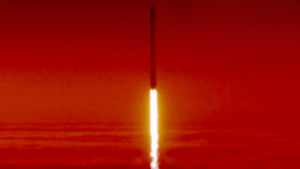
Meanwhile Blue Origin is still scaling production and recovering from setbacks, including a recent New Glenn launch-pad explosion during testing. Bezos described the incident as a “gut punch” but said reconstruction began almost immediately and New Glenn should return to flight this year.
Applying Amazon’s best practices
One area where Bezos believes Blue Origin can gain an edge is organizational speed.
He described decisiveness as one of the company’s core goals and argued that large organizations often become slow because they treat every decision as equally important.
“There are different decisions that should be made in different ways. There are giant decisions, which are consequential and irreversible, or almost irreversible, super hard to reverse. Those decisions should be made slowly, with great care,” Bezos said. “And then there are other decisions, which, even if they’re consequential, they can be reversed, and those decisions should be made by single individuals who have good judgment.”
“Decisiveness is about speed, and speed matters in business,” Bezos said. “Amazon is a giant company, but we still made decisions very quickly.”
The philosophy mirrors principles Bezos frequently championed at Amazon, where he famously distinguished between “one-way door” and “two-way door” decisions. One-way decisions are high stakes and nearly impossible to reverse, and thus require careful deliberation. Two-way decisions can be quickly undone, meaning teams should move fast and take risks.
“AI is going to create a labor shortage.” – Jeff Bezos
Beyond rockets, Bezos also addressed another topic increasingly dominating his attention: artificial intelligence.
His new venture, Prometheus, aims to build what he calls an “artificial general engineer” capable of dramatically accelerating product design and manufacturing. Rather than replacing engineers, Bezos argues AI will amplify their capabilities.
Bezos said that AI will unlock more inventions, products and businesses than humans currently have the capacity to build because AI will make it easier for them to build. In turn, he believes this would create demand for more workers rather than fewer.
This belief places Bezos at odds with many warnings about mass technological unemployment.
“I totally disagree with this point of view,” Bezos said of concerns that AI will make humans redundant. “AI is going to create a labor shortage.”
Instead of fearing AI, young people should be excited about the possibilities opening up to them.
“We’re in the middle of a bunch of golden ages right now,” Bezos said. “We live in the most incredible moment, and every young person should be so excited that they are where they are now, because it’s never been a better time to be an entrepreneur, a better time to start a company. There’s so many possibilities.”
Author

Get the latest insights about enterprise AI.
Subscribe to our newsletter. Thank you.